

Eric Sepanek
SBC Founder
Eric Sepanek is the founder of Scottsdale Bullion & Coin, established in 2011. With extensive experience in the precious metals industry, he is dedicated to educating Americans on the wealth preservation power of gold and silver.

John Karow
Sr. Precious Metals Advisor
John Karow is an experienced lawyer and Precious Metals Advisor at Scottsdale Bullion & Coin. He holds degrees from Lehigh University, the University of Missouri, Cornell University, and St. John’s University School of Law. John is a knowledgeable authority in precious metals, dedicated to helping clients navigate economic cycles and gold and silver investments.

Add SBC on Google as a preferred source to see more market related news like this when you search.


Gold has pulled back 25%, while silver has nearly halved, leaving investors wondering what comes next. For those who own gold and silver to preserve long-term wealth, diversify, and build financial security, the bigger question is whether these price corrections have fundamentally changed the reasons to invest in the first place.
Watch this week’s The Gold Spot to hear Scottsdale Bullion & Coin Founder Eric Sepanek and Sr. Precious Metals Advisor John Karow discuss how dollar-cost averaging can turn price corrections into buying opportunities, why Wall Street remains bullish on gold, and what silver’s long-term fundamentals mean for investors.
Gold and Silver Prices Plunge: Is Now the Time to Buy?
Precious metals investors have ridden a roller coaster throughout 2026, with these assets falling from all-time highs set in January. Gold prices have declined approximately 25%, from a peak of $5,600/oz to around $4,100/oz, while silver prices have dropped by almost 50%, from a record of over $120/oz to approximately $60/oz.
Investors who bought near these peaks may be second-guessing their positioning, wondering if they bought at the wrong time, should cut their losses, or wait for prices to recover.
Yet, short-term price movements, even volatile swings, don’t undermine long-term investment strategies. Gold and silver serve several purposes beyond immediate price appreciation, including:
- Portfolio diversification: Reducing dependence on stocks, bonds, and other traditional investments.
- Inflation protection: Preserving purchasing power as inflation increases the cost of living.
- Currency protection: Hedging against the long-term depreciation of the U.S. dollar.
- Crisis insurance: Providing a potential safe haven during economic and geopolitical instability.
- Long-term wealth preservation: Protecting accumulated wealth across market cycles and generations.
For investors planning to hold precious metals for five or ten years or decades, the role of gold and silver in a diversified portfolio isn’t negated by temporary price fluctuations. In fact, long-term investors often see pullbacks in prices as an opportunity to accumulate more metals at relatively lower prices.
“If your long-term reasons for owning gold haven't changed, a lower price doesn't necessarily mean your strategy was wrong. It could mean you have an opportunity to improve your average cost.”
John Karow
Sr. Precious Metals Advisor

Dollar-Cost Averaging: Making the Most of Lower Prices
Instead of trying to time the market’s bottom perfectly, forward-thinking investors often use dollar-cost averaging to gradually reduce their overall cost of owning gold and silver.
“Dollar-cost averaging is one of the best plays for the long-term investor. Dollar-cost averaging is very simple. Instead of trying to pick the absolute bottom or the absolute top, as pullbacks happen, you buy back into the market to average down your overall investment. A very good tactic.”
Eric Sepanek
SBC Founder
For example, if you purchased gold at $5,000/oz, prices around $4,100/oz allow you to buy roughly 22% more gold for the same investment, while lowering your average acquisition cost.
In addition to the math making sense, many big-wigs on Wall Street are actively encouraging investors to take advantage of these relatively discounted prices:
- UBS: The bank’s Chief Investment Office advises that “Underallocated investors could use periods of weakness to build strategic exposure” within a diversified portfolio.
- Morgan Stanley: Amy Gower, the firm’s head of metals and mining strategy, recommends increasing gold exposure during pullbacks, explaining, “On these pullbacks, we would be looking to add to gold positions.”
- TD Securities: Commodity strategists Bart Melek and Ryan McKay encourage investors to consider buying during corrections, advising, “Any near-term weakness in the yellow metal should be increasingly viewed as a potential buying opportunity.”
Gold’s Long-Term Fundamentals Remain Intact
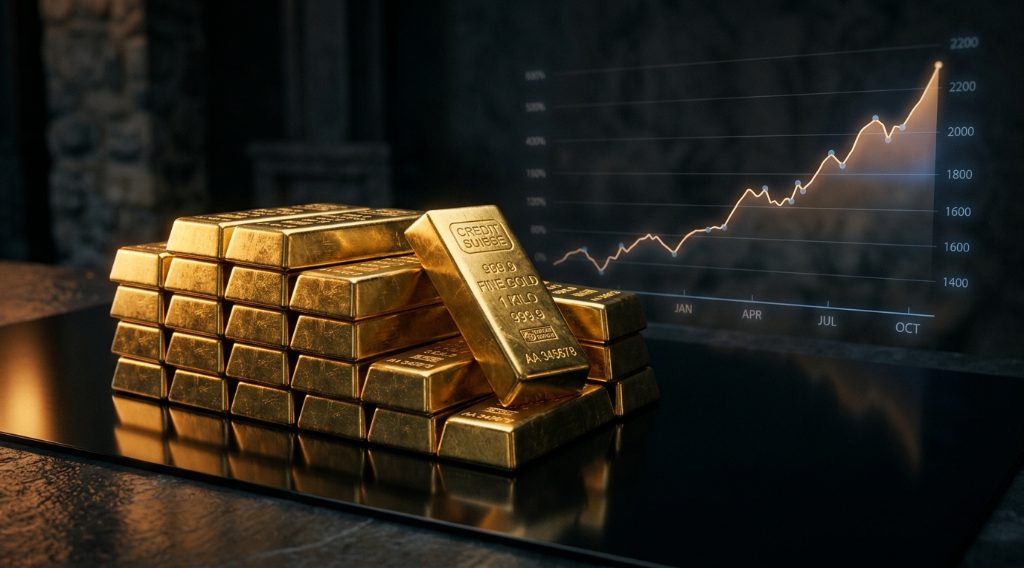
Focusing too much on interim price movements also risks overlooking the underlying macroeconomic and geopolitical factors fueling gold and silver’s structural demand. Several variables point to continued strength:
- Mounting national debt: America’s national debt has surpassed $40 trillion, with interest costs running around $1 trillion annually. Persistent federal deficits and concerns about currency depreciation continue to support gold’s long-term appeal.
- Record central bank demand: Central bank demand has remained historically high for years, with official buying soaring over 1,000 tonnes annually between 2022 and 2024, and reaching 863 tonnes in 2025, firmly propping up the metal’s trajectory.
- Rising Chinese demand: China is aggressively accumulating gold, including more than 1,000 tonnes in imports during the first eight months of 2026 and 23 consecutive months of central bank purchases, leading the charge among emerging economies.
- Record gold ETF holdings: Global gold ETF holdings reached a record 4,189.2 metric tons in August, supported by billions in new investment inflows. Notably, Western investors in North America and Europe are reentering the market with strength.
- Growing physical gold demand: Wealthy investors are increasingly seeking direct bullion ownership, with rising demand straining private vault capacity in major financial centers.
Altogether, these ongoing developments indicate that gold’s fundamental appeal remains, even through short-term price fluctuations.
Wall Street Still Sees Significant Upside for Gold

Investors don’t have to rely on reading market fundamentals, however. There’s a growing consensus among Wall Street elites that gold’s downside is running out of room. Even after the Federal Reserve’s most recent rate hike—typically viewed as a temporary headwind—several banks remain bullish on gold.
This puts some important context behind gold and silver’s short-term correction. Instead of being driven by internal factors, these dips are easily explained by the broader macroeconomic and geopolitical issues, such as higher Treasury yields, a strengthening dollar, the Fed’s tightening policy, and strong stock market gains from AI hype.
Rather than fueling skepticism among major financial institutions, the broad view is positive for gold, despite these short-term challenges. Gold price predictions for 2026 and beyond remain optimistic. For example:
- Morgan Stanley: Expects gold to rebound above $5,000/oz in the second half of 2027, despite near-term pressure from higher bond yields and a stronger U.S. dollar.
- UBS: Forecasts a gradual recovery to $4,600/oz by December 2026, $5,000 by March 2027, $5,200 by June, and $5,400 by September, while allowing for continued volatility along the way.
- Goldman Sachs: Projects gold reaching $5,400/oz by the end of 2027, supported by central bank demand and expectations surrounding Fed policy.
- State Street Investment Management: Aakash Doshi, the firm’s head of gold strategy, believes gold could eventually reach $10,000/oz, citing sovereign debt, currency depreciation, and growing demand for portfolio diversification.
Silver’s 50% Correction: What About the Long-Term Outlook?
While gold receives most of the market attention, silver’s steep correction may be masking an attractive buying opportunity for long-term investors. The metal’s dramatic 50% correction since January highs risks overshadowing its meteoric rise over the past few years. Consider that silver was trading below $13/oz in 2020.
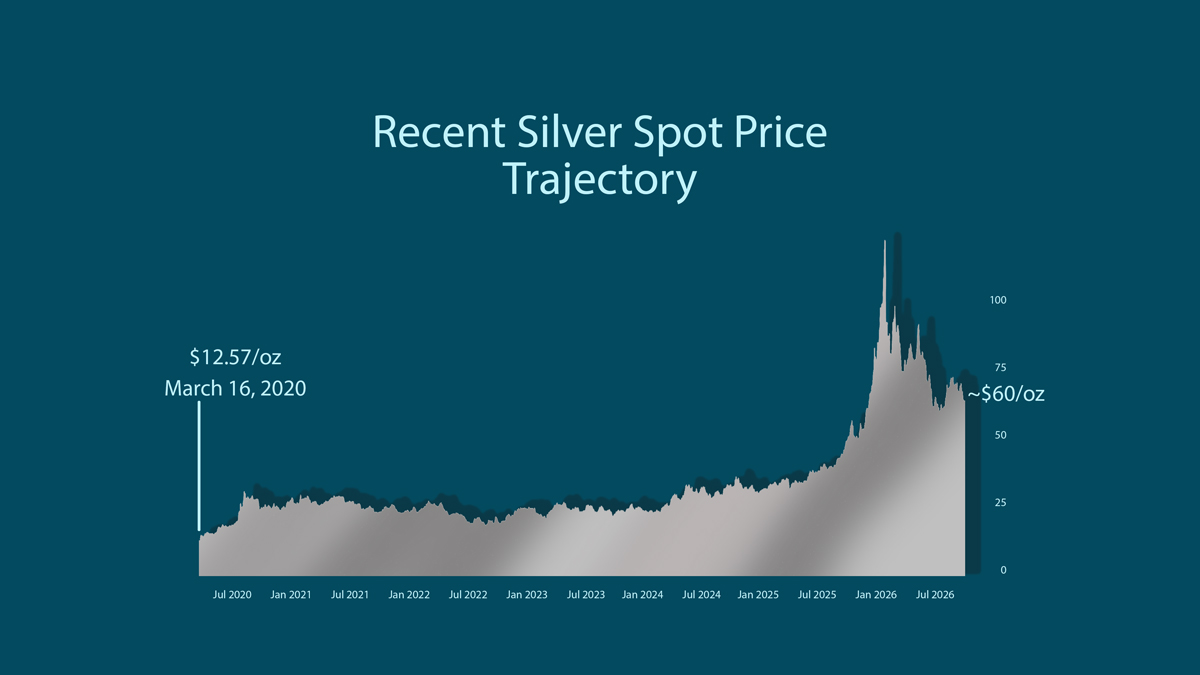
Although silver tends to rise alongside gold, some market-specific factors point to long-term strength for the shiny metal:
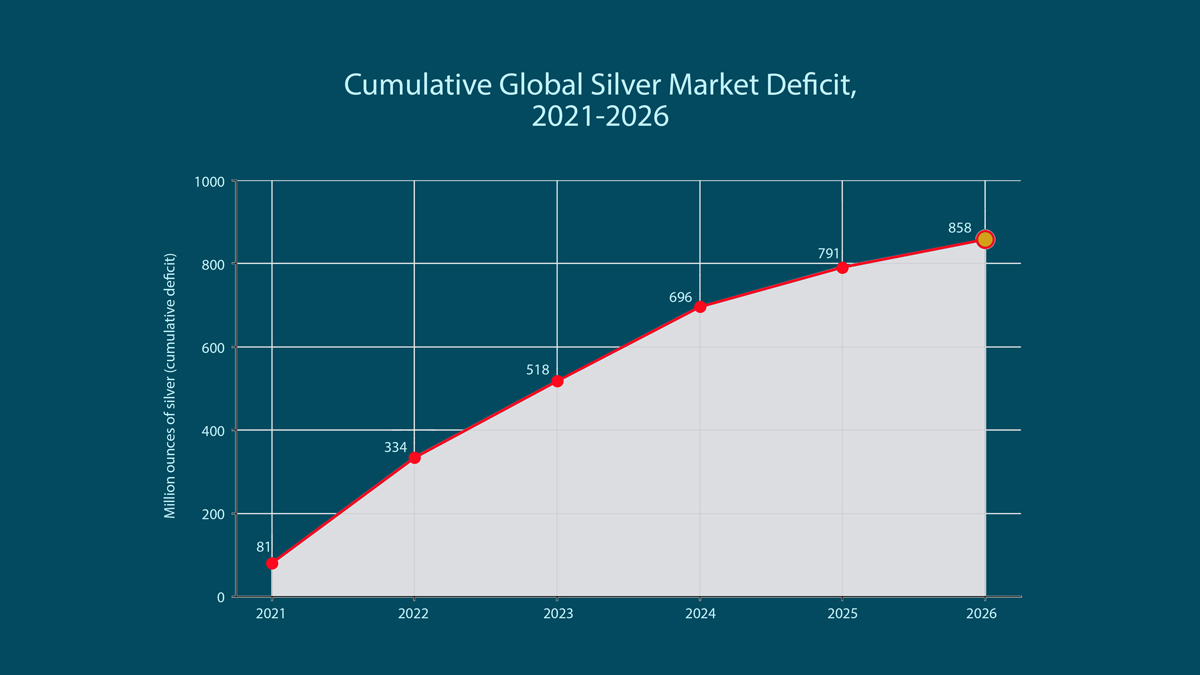
- Persistent supply deficit: 2026 is on track to be the silver market’s sixth consecutive year of supply deficit as rising industrial and investment demand strains available stockpiles.
- National security importance: Silver is increasingly seen as a core asset for economic stability and national security. The Geological Survey recently added silver to the U.S. Critical Minerals List.
- Global supply restrictions: Meanwhile, China has tightened silver export restrictions, raising concerns about global supply given the country’s disproportionate role in mining production.
- Growing AI demand: According to the Silver Institute, expanding AI infrastructure, data centers, and advanced electronics are expected to support silver consumption through 2030.
Despite the market’s current obstacles, silver price predictions for 2026 and beyond remain bullish. For instance, Citi has projected silver could recover to $75/oz in the near term, before reaching $90/oz within the next year. For long-term investors, the combination of lower prices and a favorable outlook may offer an opportunity to increase holdings at a lower cost gradually.
Is Now the Time to Buy Gold and Silver?
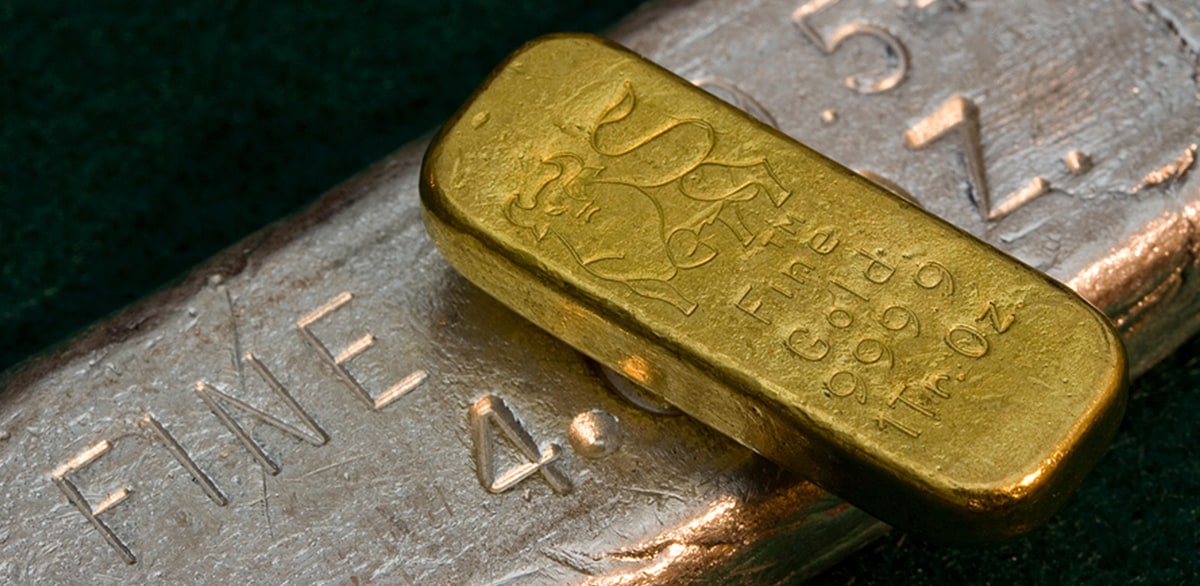
Ultimately, the most important question isn’t where gold or silver will trade next month. It’s whether the reasons for owning precious metals have fundamentally changed.
For investors planning to hold gold and silver over the next five to ten years or beyond, price corrections may offer opportunities to improve their average acquisition costs while building long-term positions.
That same strategy can extend to retirement planning, where investors may consider holding physical gold in an IRA as part of a diversified portfolio.
If you’re interested in learning more about how gold and silver can help preserve your wealth, claim a FREE copy of our Precious Metals Investment Guide. It covers the basics of precious metals investing along with 22 of the most common mistakes to avoid.
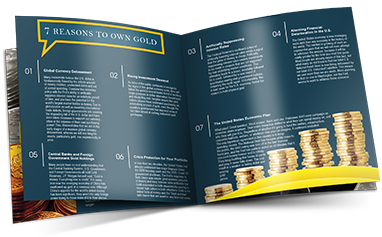
Everything you need to know to get started in Precious Metals
Learn how precious metals can strengthen your portfolio, protect your assets and leverage inflation.
Request the Free Guide
Question or Comments?
If you have any questions about today’s topics or want to see us discuss something specific in a future The Gold Spot episode, please add them here.
Comment
Questions or Comments?
"*" indicates required fields