
Investors have been treated to a whirlwind of economic, geopolitical, and political upheaval over the past year, leaving many anxious about the future. On the international stage, regional powers are testing US dominance and hot wars are raging across continents. Domestically, living costs are soaring to burdensome highs, the threat of mounting debt looms, and political divisions are increasingly fraught.
The economics mirroring these challenges haven’t cleared up much of the uncertainty, throwing out mixed signals and false senses of security. Stocks traded at all-time highs throughout much of 2024, and precious metals (which usually move in the opposite direction) posted their record-setting rally. At the same time, gold flipped its normally inverse relationship with bond yields, further muddying the financial waters.
Despite sitting near record highs, gold remains poised as a solid investment for 2025. Here’s why:
Reasons Why Gold Should Be a Good Investment in 2025
1. Growing Geopolitical Tensions

The geopolitical outlook is dire heading into 2025 as hot wars rage, trade wars loom, and power balances shift. The Israel-Hamas War has exploded into a regional crisis which is only exacerbated by the recent overthrow of Assad and the resulting power vacuum. In the years-long war of attrition between Russia and Ukraine, both sides are making efforts at decisive victory. Ukraine got the green light from Washington to launch US missiles into Russia, and the Kremlin continues brandishing its nuclear capabilities. The rising temperature has many experts raising the alarm about a potential (in some estimates, imminent) World War III.
“We are at the beginning of World War 3. Just look at the history of the other world wars.”
John Karow
Precious Metals Advisor

2. Entrenched Inflation
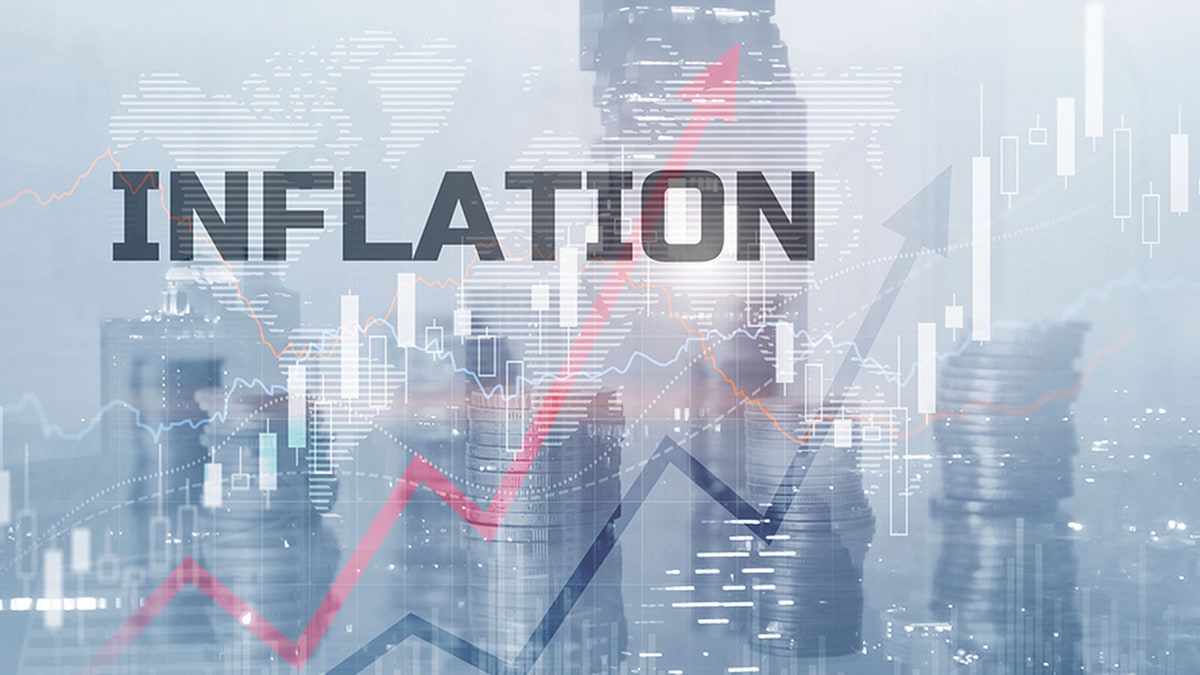
The Federal Reserve’s drumbeat reassurance of a victorious soft landing has lulled many investors into a false sense of confidence. Although inflation is down from dramatic highs, it remains well above the target range. Fed Chair Jerome Powell admitted to the ongoing battle with inflation by curbing interest rate cuts at signs of growing inflationary pressures. At the close of 2024, inflation stands at 2.7% which means threatened spending power, reduced savings, and higher living costs. With a tendency to keep pace with inflation, gold is sought by many investors looking to preserve wealth.
Related Reading: Is Silver a Good Hedge Against Inflation?
“Inflation is very, very good for gold.”
Tim Murphy
Precious Metals Advisor

3. Interest Rate Easing Cycle

Following years of pandemic-fueled interest rates, the Fed ushered in a long-awaited easing cycle with an abrupt 50-basis point rate cut in 2024. While stubborn inflation has slowed the anticipated pace of those slashes, our fiscal czars have plans to reduce rates throughout 2025. The resulting low-interest-rate environment tends to be bullish for gold prices as the opportunity cost of owning non-yielding assets such as precious metals is reduced. Simultaneously, the advantages of parking money in USD and dollar-backed assets decrease with each rate cut.
▶️ Related video: Dollar Cost Averaging: What Is It & How It Maximizes Gold Bullion Returns
“When we cut rates...the dollar weakens...and precious metals go up.”
Damian White
Sr. Precious Metals Advisor

4. Global De-Dollarization

De-dollarization has emerged as a top concern among politicians and fiscal leaders as the global movement makes tremendous strides. More and more nations are reducing their reliance on the dollar by offloading dollar-linked assets such as bonds and diversifying their reserves with gold. The expanding BRICS block held its largest meeting ever in 2024, and the group of emerging economies heads into 2025 stronger than ever. A future with a less powerful dollar is a key goal of the increasingly powerful group.
“The purchasing power of our dollar is going down. Gold and silver are going to be the best place to have your money.”
Todd Graf
Precious Metals Advisor

5. Multipolar World

Since the end of the Cold War, the world has enjoyed a period of uncharacteristic peace by historical standards. However, the increasing hostility and cooperation between antagonistic states such as Russia, China, Iran, and North Korea has pierced the largely peaceful veil of a Pax Americana. 2024 was a preview of how the emerging multipolar world of competing powers leads to more violence, uncertainty, and instability. In the chaos, gold has emerged as the great equalizer and source of financial stability in a post-dollar-dominated world—a reality underscored by the aggressive pace at which emerging economies are bolstering their reserves.
“The advantage of gold is that it provides stability in uncertain times.”
Eric Sepanek
SBC Founder

6. Skyrocketing US National Debt

The US national debt is chugging along with no roadblocks in sight, stretching to $36 trillion in 2024. The past two administrations added more than $12 trillion to the tally, proving that reckless spending and endless printing are a feature of both political parties. As the debt mounts, the management costs grow exponentially. Currently, servicing the national debt eats $1 trillion annually out of the federal budget. That’s more than the defense budget–a development billionaire David Rubenstein called a “grenade” for the US economy. Relief isn’t around the corner, either. President-elect Donald Trump is projected to rack up an additional $7.75 trillion according to the Committee for a Responsible Federal Budget (CRFB). The more debt piled onto the dollar, the more central banks and investors are fleeing to safe havens such as gold to protect their wealth.
“The buying opportunities are here…for people to jump on this market and…take advantage of the gold prices that haven't gone up through the roof yet.”
Steve Rand
Sr. Precious Metals Advisor

7. Trump 2.0
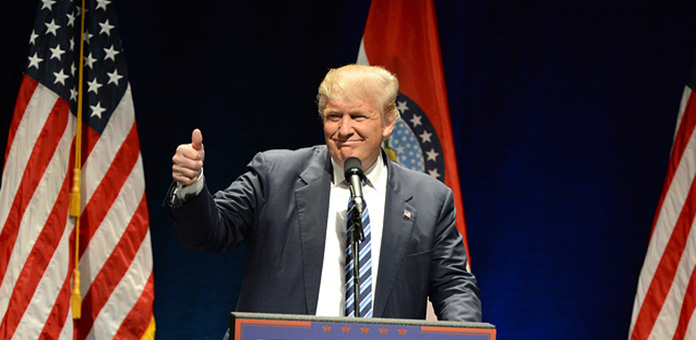 Tariffs have become a mainstay of the Trump administration’s economic and foreign policy posture, threatening unprecedented levies on friend and foe alike. Even some supporters believe these drastic yet necessary measures will result in short-term pain for long-term gain. Blowing up the trade status quo could onshore more jobs, rebuild the American economy, and lead to better deals down the line. However, it could also boost inflation, increase government spending, and drive up living costs—all factors that push people toward gold.
“Long term, I expect tariffs to be very, very positive for the country, but it’s not going to be without some pain in the meantime.”
Steve Rand
Sr. Precious Metals Advisor
8. Bullish Gold Price Forecasts
Following years of sluggish price action, the price of gold has entered a sustained rally throughout 2024, reaching several new highs along the way. Starting the year at $2,063.73/oz, the yellow metal soared to a record high of $2,786.91, representing a remarkable 35% increase. After shaking off a post-election dip, gold is now surging toward recent highs, underscoring its robust strength. This unprecedented performance, combined with the gold-positive indicators driving its growth, has experts predicting continued gains in the year ahead. 2025 gold price forecasts are extremely bullish with many experts calling for $3,000 and beyond.
“The market is moving in a direction that supports owning precious metals. Make sure you're in a position to take advantage of it.”
John Karow
Precious Metals Advisor
9. Booming Central Bank Demand

Central bank demand is one of the most powerful determiners of gold’s performance. When these governmental investors pour into gold, the yellow metal inevitably elevates in price. That’s precisely what’s happened over the past few years. Gold prices have steadily risen from around $1,700 since 2022 due to record-setting consumption in 2022, 2023, and the first half and quarter three of 2024. A World Gold Council (WGC) survey indicates central banks plan to continue topping up their reserves in 2025, further supporting higher gold prices. In fact, 80% of central bank participants anticipate a rise in global central bank gold reserves.
10. Growing Retail Demand

Although the yellow metal’s performance is primarily determined by central bank demand, retail investments influence gold prices, too. Normally, there’s a slight delay between national and institutional demand as everyday investors follow the lead of market giants. In 2024, retail demand concentrated in the middle of the year with a six-month streak of gold ETF inflows. The focal point of demand spread from Asia to the West toward the end of the year as North American investors picked up their slack. The gold market is also seeing booming demand from younger generations. In fact, 17% of millennials hold gold compared to 10% of Baby Boomers, suggesting a renaissance in gold buying.
“Ever since the pandemic, we've seen an increase in demand for both gold and silver...and very few sellers.”
Joe Elkjer
Precious Metals Advisor

11. Supply Constraints

In gold’s positive 2025 outlook, the flip side of booking demand is waning supply. Global gold supply only rose 5% in 2024, and mining production wasn’t far ahead with a 6% annual increase. The WGC is actively warning that gold is getting harder to find due to stricter mining regulations, the dearth of cost-effective reserves, and bureaucratic red tape. With central bank demand predicted to jump and supplies on track for limited growth, gold prices are set up for a slingshot effect toward the upside.
“Gold has always been a reliable store of value...Gold is insurance on your money.”
Eric Sepanek
SBC Founder
Gold Investment Options
Of course, gold is also available in forms other than a hard asset like gold coins and gold bars that you purchase and store in a secure vault. If you want the security of gold but prefer not to be responsible for holding it, you could consider:
- Digital gold – which is an electronic money backed by real gold reserves.
- Gold exchange-traded funds (ETFs)
- Gold mining stocks
- Gold mutual funds
However, it is important to note that having paper-backed gold, instead of real physical gold in your possession, is not true diversification.
Related Reading: Different Types of Paper Gold Assets: Pros and Cons
Additionally, there are several other things to consider before investing this way. Learn what those are in our FREE GOLD INVESTMENT GUIDE.
Also, when it comes to physical gold investing, not all physical gold products are the same. Investment grade coins may have an even greater upside potential for gold investors as their rarity can drive value up, even when gold prices are down, whereas the value of bullion is generally linked to weight and the spot price of gold. To find out more about why investment grade coins could be your best choice, read: Bullion vs. Numismatic Coins: What You Should Know Before Investing.
Whichever form you decide to purchase or invest in will offer its unique advantages and disadvantages, but the bottom line is that gold is a solid, no pun intended, investment that has been around and will be around, for a long time. Do your research and you’ll likely agree that gold is an investor’s ideal option for securing a financial portfolio.
Don’t Wait to Buy Gold—Buy Gold and Wait!