

Eric Sepanek
SBC Founder
Eric Sepanek is the founder of Scottsdale Bullion & Coin, established in 2011. With extensive experience in the precious metals industry, he is dedicated to educating Americans on the wealth preservation power of gold and silver.

Add SBC on Google as a preferred source to see more market related news like this when you search.

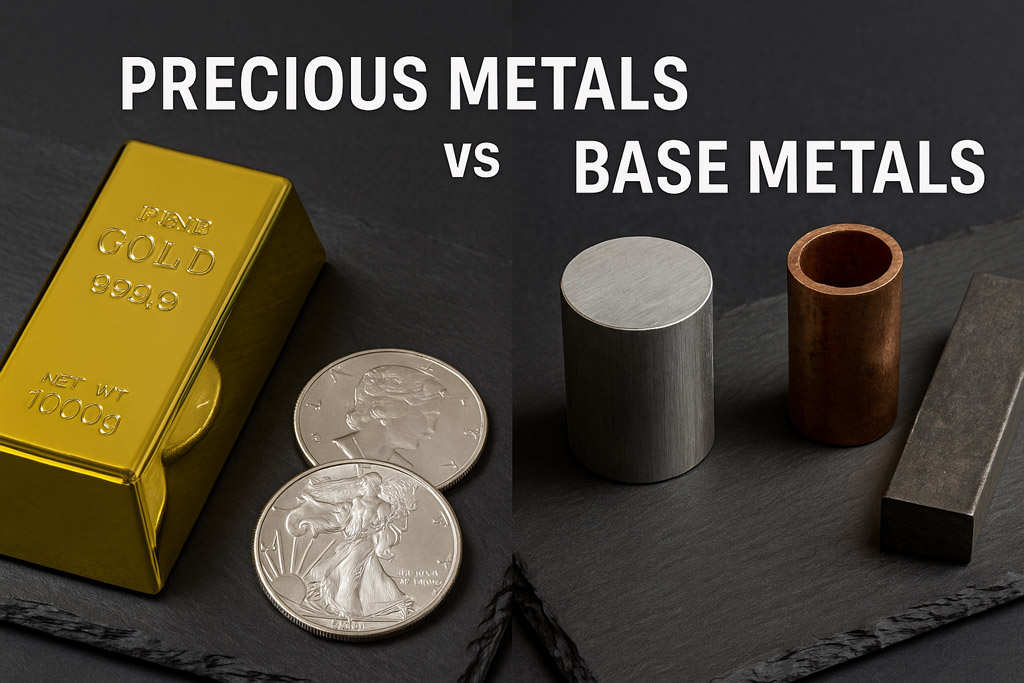 Precious metals like gold and silver are rare, resist corrosion, and have been used as money for thousands of years. Base metals like copper, nickel and zinc are abundant, react more easily with their environment, and are valued mainly for industrial use. That difference explains why an ounce of gold costs thousands of dollars while a pound of copper costs a few, and why only precious metals are treated as long-term stores of value.
Key takeaways
- Precious metals are rare, corrosion-resistant and historically used as money. Base metals are common and mostly industrial.
- Gold is roughly 10,000 times rarer than copper in the Earth’s crust, and its price reflects that.
- Gold, silver, platinum and palladium can be held in a precious metals IRA. Base metals can’t.
What is a base metal?
A base metal is any of the common, relatively inexpensive metals used in everyday applications like electrical wiring, plumbing and construction. They’re more abundant and cheaper to mine than precious metals.
That abundance keeps their value tied almost entirely to industrial demand, which is why base metals have never served as reliable long-term stores of value. They have been used in coinage for a very long time, though. Copper and bronze coins circulated in ancient Greece, Rome and China. After the world moved to fiat currency, base metals became the default for nearly all circulating coins, because there was no longer any requirement to back money with gold or silver.
Some of the most common base metals include:
- Aluminum
- Copper
- Iron
- Lead
- Nickel
- Tin
- Zinc
What is a precious metal?
Precious metals are rare, naturally occurring metallic elements distinguished by their economic value. These metals are unique among more common metals due to their relative scarcity, inherent value, and investment merits.
Although most precious metals have practical uses, they’re best known as stores of value. Their scarcity, durability and long history as money give them far higher valuations than base metals.
Precious metals are available in several physical forms for investment, including bars, coins, and rounds. Some of the most common precious metals include:
👉 Suggested Read: Platinum vs Silver: Which Is the Better Investment?
Other Types of Metals
Base metals and precious metals are the most commonly discussed metals in investing, but a few other categories come up during research.
Alloy Metals
An alloy is created by melting two or more metals together to combine their advantages in one material. Most modern circulating coins are alloys chosen for durability. Some bullion coins also include a small amount of other metal to harden the naturally soft gold. For example, the 22-karat American Gold Eagle is 91.67% gold, while many other bullion coins are .9999 fine. Here’s how gold purity, fineness and karat ratings work.
Ferrous Metals
Ferrous metals are iron or metals that contain iron, such as steel and cast iron. Elements like chromium, manganese and cobalt are often added to steel to create alloys, but they aren’t ferrous metals themselves. Ferrous metals are strong but prone to rust, which is one reason they’re rarely used for coins. A famous exception is the 1943 U.S. steel penny, minted when copper was needed for the war effort.
Rare Earth Metals
Despite their name, rare earth metals exist in greater supplies than precious metals. However, investors have been attracted to the steadily increasing demand for these obscure metals in high-tech industries such as electronics and renewable energy. Still, rare earth metals remain a growing and speculative area of investment.
Precious Metals vs Base Metals: Key Differences
| Precious Metals | Base Metals | |
|---|---|---|
| Examples | Gold, silver, platinum, palladium | Copper, nickel, zinc, lead, aluminum |
| Abundance | Very rare | Common |
| Corrosion | Resist rust and tarnish | Oxidize or corrode more easily |
| Main source of value | Scarcity, monetary history, investment demand | Industrial demand |
| Store of value? | Yes, for thousands of years | No |
| IRA-eligible? | Yes, if they meet IRS fineness standards | No |
Scarcity
Scarcity is a foundational distinction between precious metals and base metals, determining their value (or lack thereof). The impressive rarity of precious metals creates higher tension between supply and demand, resulting in higher prices. On the other hand, the plentiful natural reserves of base metals lead to lower valuations.
For example, gold and silver have average crustal concentrations of roughly 0.003 and 0.1 parts per million (ppm). That’s about 3 milligrams of gold and 100 milligrams of silver in every metric ton of rock. Nickel and copper, by comparison, average around 25 and 40 ppm.
Inherent Value
Inherent value is another distinguishing characteristic between precious and base metals. While the former group boasts intrinsic worth independent of external factors, the latter’s value is entirely dependent upon utility or demand.
Gold and silver derive their inherent value from their natural scarcity, unique physical characteristics, universal recognition, and millennia-long history as stores of value and means of exchange.
Corrosion Resistance
Although some base metals boast greater tensile strength, they don’t feature the same corrosion resistance as their precious metals cousins. Gold, silver, platinum, and palladium are renowned for their ability to avoid rust or tarnish by withstanding oxidizing agents such as oxygen and moisture. This ability to maintain physical integrity and appearance makes precious metals popular for coinage and jewelry.
Price
Price is where the gap becomes obvious. As of September 2026, gold traded around $4,300 per troy ounce, while copper traded around $6.75 per pound. A pound of gold (about 14.6 troy ounces) was worth more than $60,000, roughly 9,000 times the value of a pound of copper.
Looking ahead, see our 2026 gold price forecast and 2026 silver price forecast. Over the long run, gold has outshined stocks in the 21st century so far.
Investment Merit
The investment merit of precious metals is secured by the combination of inherent value, natural scarcity, corrosion resistance, strong prices, universal recognition, and historical use.
👉 Related Read: Introduction to Investing in Precious Metals
Base metals fall short on nearly all of these metrics, preventing them from being adopted as stores of value and investment vehicles. This distinction is reinforced by precious metals IRAs, which allow investors to put tax-advantaged dollars towards physical gold, silver, platinum, and palladium assets.
Diversify Your Portfolio with Precious Metals
If you’re deciding how much of your wealth to hold in physical metals, start with our guide to how much gold should be in your portfolio. Then grab a FREE copy of our Precious Metals Investment Guide. It covers everything you need to know about protecting your wealth with gold and silver.
Precious vs Base Metals FAQ
No. Copper is a base metal. It’s valuable for industry, especially wiring and electronics, but it’s far more abundant than gold or silver, corrodes more easily, and isn’t used as a store of value.
Gold, silver, platinum and palladium. These are the four precious metals investors commonly buy as bullion, and the four the IRS allows in a precious metals IRA when they meet minimum fineness standards.
Gold is extremely scarce, doesn’t rust or tarnish, and has served as money for thousands of years. Those qualities create steady investment and central bank demand that base metals, which are valued mainly for industrial use, don’t have.
Not as physical metal. A precious metals IRA can only hold approved gold, silver, platinum and palladium products that meet IRS purity requirements.