

Eric Sepanek
SBC Founder
Eric Sepanek is the founder of Scottsdale Bullion & Coin, established in 2011. With extensive experience in the precious metals industry, he is dedicated to educating Americans on the wealth preservation power of gold and silver.

John Karow
Sr. Precious Metals Advisor
John Karow is an experienced lawyer and Precious Metals Advisor at Scottsdale Bullion & Coin. He holds degrees from Lehigh University, the University of Missouri, Cornell University, and St. John’s University School of Law. John is a knowledgeable authority in precious metals, dedicated to helping clients navigate economic cycles and gold and silver investments.

Add SBC on Google as a preferred source to see more market related news like this when you search.

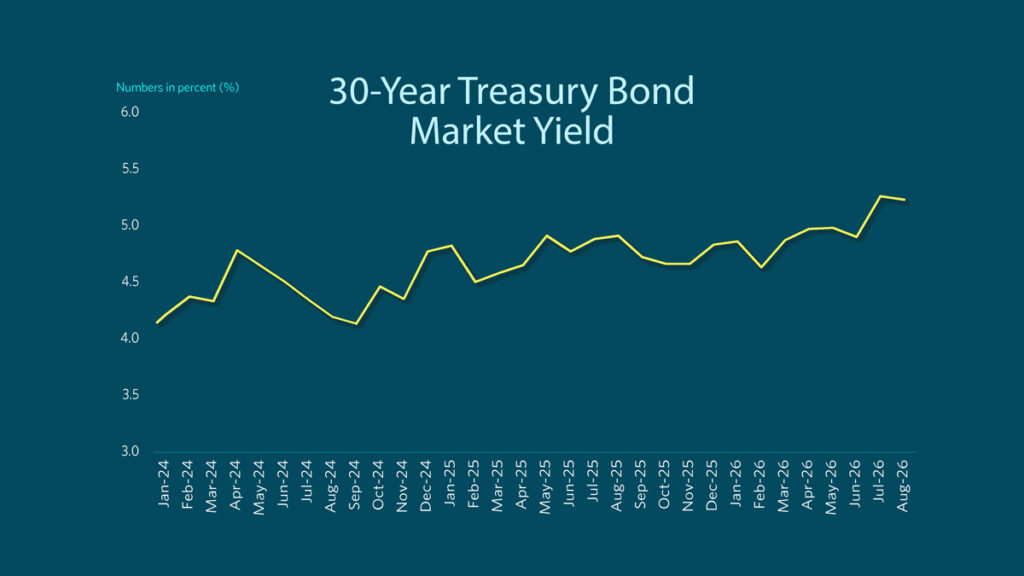
The U.S. debt cleared $40 trillion just as servicing costs skyrocket. More specifically, the 30-year Treasury yield recently hit its highest level in 19 years, as buyers of America’s debt demand higher yields.
While the federal government has to offer more to investors to support its profligate spending, the artificial intelligence boom is creating fierce competition. America’s largest technology companies are flooding bond markets to finance their spending.
In this week’s The Gold Spot, Scottsdale Bullion & Coin Founder Eric Sepanek and Sr. Precious Metals Advisor John Karow discuss the growing tug-of-war between Washington and Big Tech for investor capital, the risks of increasingly expensive debt, and why gold could benefit as financial pressures mount.
U.S. Debt Hits $40 Trillion as 30-Year Yields Top 5%
The national debt just crossed the $40 trillion milestone, and remains projected to hit $50 trillion by mid-2029. These constantly expanding figures can feel abstract in isolation, but the snowballing servicing costs can show how the scale of debt directly exacerbates government borrowing.
Alarmingly, the 30-year Treasury yield recently reached over 5.3%, the highest point since 2007. This yield is often used as an indicator of the economy’s broader health as it reflects investors’ long-term outlook. Right now, investors are demanding more compensation to lend Washington money than at any point in the past 19 years, which means higher debt servicing costs.
The Congressional Budget Office (CBO) reports that net federal interest spending hit $970 billion in fiscal year 2025. This number is projected to reach $1.04 trillion in FY 2026, representing a 7% increase in under a year. The CBO attributes most of that increase to rising publicly owned debt.
A few months ago, Congressman David Schweikert sat down with Scottsdale Bullion & Coin to discuss the CBO findings. In summary, the House representative said that:
The fiscal trajectory is not sustainable.–
 SUGGESTED VIDEO
America’s Cheap Debt Is Gradually Becoming Expensive Debt
The U.S. government’s $40 trillion worth of debt doesn’t get refinanced at these new rates overnight. Instead, previously issued debt gets refinanced at current rates as it matures and the government rolls it over, essentially replacing the old debt with newly issued debt. As Treasury yields soar, the cost of servicing the national debt rises, albeit gradually.
Although it doesn’t happen all at once, this process creates a deeply entrenched positive feedback loop. Higher yields increase interest costs; larger interest expenses add to deficits; deficits require additional borrowing; and a larger debt balance generates even more interest expense.
At the same time, Washington is only accelerating its spending. The CBO recently raised its projected federal deficits for FY 2026 from $1.9 trillion to $2.1 trillion. As building blocks of national debt, rising federal shortfalls reinforce rapid debt expansion.
AI’s Borrowing Spree Raises the Stakes for Washington
With the AI explosion accounting for an increasingly large portion of equity and economic growth, the stock market’s warning signs are getting harder to ignore. While fears of an AI bubble are growing among the general public, this explosion of tech investment also complicates the government’s debt burden.
To finance record AI spending, some of the world’s largest technology companies are increasingly turning to bond markets for capital. Between Alphabet, Amazon, and Meta alone, companies have issued almost $220 billion in bonds so far in 2026. Washington’s borrowing difficulties are challenging enough in isolation. Big Tech’s simultaneous fundraising only complicates the issue.

That does not mean every dollar entering an AI bond is directly leaving a Treasury. Still, AI bonds can offer higher yields than government securities, while rising Japanese yields are giving overseas investors another reason to keep capital at home. Bond markets are being asked to absorb huge amounts of long-duration debt from several directions at once.
“The real issue is when you combine the AI debt with the government debt, it acts like a multiplier. You've got a wave of new corporate supply competing directly with the government for the same pool of buyers at the exact moment the government needs those buyers the most.”
John Karow
Sr. Precious Metals Advisor

Warnings Are Coming From Every Corner
The pressure building across government debt, AI financing, and broader markets isn’t going unnoticed. From billionaire investors and Wall Street executives to outspoken AI critics, prominent voices are warning about different parts of the same increasingly fragile setup. For example:
- Billionaire investor and Bridgewater Associates founder Ray Dalio has compared today’s AI enthusiasm with the speculative environments of 1929 and the dot-com bubble.
- AI critic Ed Zitron has focused on circular financing and increasingly complex funding structures supporting the AI buildout.
- Professor and popular author Scott Galloway has warned that an AI unwind could have consequences extending well beyond a handful of technology stocks.
- JPMorgan CEO Jamie Dimon recently said he would not be a buyer of long-dated Treasuries at current prices and has also expressed reluctance toward broad equity markets.
- Bank of America strategist Michael Hartnett projects U.S. debt could reach $50 trillion by July 2029.
- Famed stockbroker Peter Schiff highlights how the national debt is a bipartisan issue, with administrations on both sides of the political aisle contributing to the financial burden.
Treasury just announced that it will buy more long-term Treasuries private investors no longer want to hold to try to keep yields from rising. The money to pay for it will ultimately be created by the Fed, sending inflation soaring. That’s why gold is already up $125 on the news!
— Peter Schiff (@PeterSchiff) August 19, 2026
How Higher Rates Are Already Hitting Main Street
On its face, rising long-term Treasury yields may seem like an isolated issue affecting Washington, but everyday investors are negatively impacted, too.
Long-term Treasury yields are often viewed as a barometer for the economy’s trajectory because they help establish the baseline cost of borrowing across the financial system. When government yields rise, borrowing tends to become more expensive for households and businesses.
- Mortgages: The average 30-year fixed mortgage stood at 67% as of August 13, compared to roughly 3% during the pandemic-era lows, putting today’s rates near their highest levels since the 2007–2008 housing cycle peak.
- Auto Loans: Americans carry $1.71 trillion in auto debt, up from roughly $1.1 trillion in 2019. The latest average rate on a 72-month new-car loan is 6.97%, compared to about 4% to 5% before 2020, marking the highest borrowing costs in over a decade.
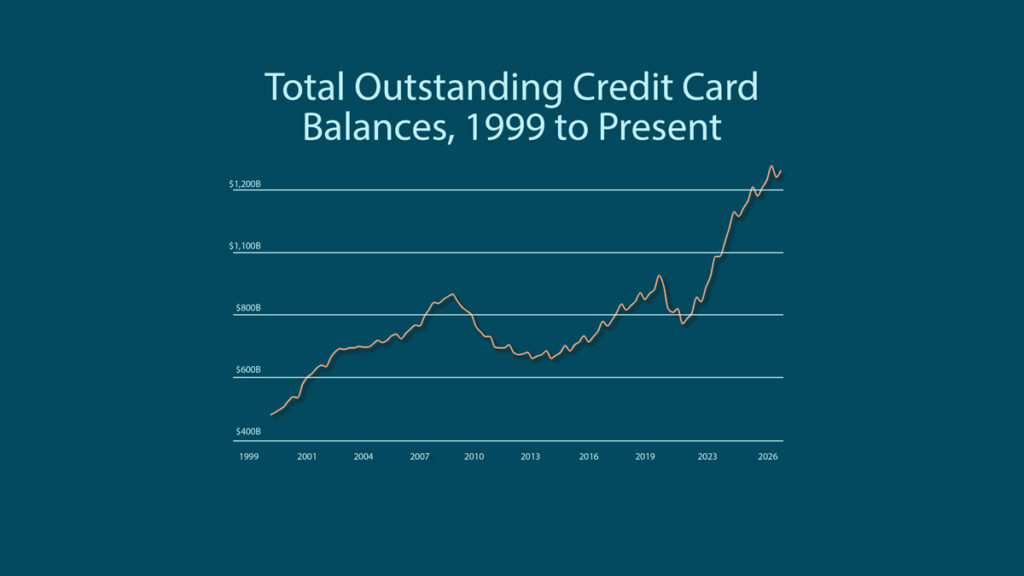
- Credit Cards: Balances have reached $1.26 trillion, up from about $0.8 trillion in 2019, while accounts carrying interest now face an average rate of 22.15%, the highest on record in Federal Reserve data going back more than 30 years.
- Business Financing: Small-business borrowing rates remain around 7%, compared with roughly 4.5%–5.5% before the pandemic, reflecting a sustained increase in financing costs.
Across the economy, consumers, businesses, and Washington are carrying massive debt loads while facing some of the highest borrowing costs in years.
“The bill on the national debt doesn't stay in Washington. It shows up in a family's monthly budget and in the long-term purchasing power of their savings.”
John Karow
Sr. Precious Metals Advisor
Why This Setup Matters for Gold

Usually, a spike in long-term Treasury yields weighs on precious metals demand as interest-bearing assets become more appealing due to higher returns. However, gold has remained remarkably resilient throughout the steady rise in long-term yields, suggesting that investors are looking beyond the immediate appeal of higher bond income.
More specifically, gold’s physical nature places it comfortably outside the broader economy’s increasingly shaky debt structure. Notably, the yellow metal doesn’t carry the same counterparty risk as other assets closely tied to market performance or the country’s fiscal trajectory.
“Gold is the clearest hedge against a weaker dollar, a strained bond market, and rising asset inflation.”
John Karow
Sr. Precious Metals Advisor
This reality helps explain why major institutions continue to see upside in gold and why Michael Hartnett has highlighted the metal as a hedge against dollar weakness, bond-market strain, and asset inflation.
If you want to understand better how precious metals can help protect your wealth in an increasingly debt-driven financial system, grab a FREE copy of our Precious Metals Investment Guide. It breaks down the role gold and silver can play in diversification, wealth preservation, and long-term financial planning.
Question or Comments?
If you have any questions about today’s topics or want to see us discuss something specific in a future The Gold Spot episode, please add them here.
Comment
Questions or Comments?
"*" indicates required fields