

Steve Rand
General Manager / Sr. Precious Metals Advisor
Steve Rand is the General Manager and a Sr. Precious Metals Advisor at Scottsdale Bullion & Coin. He brings over 20 years of experience in the physical precious metals markets.

Brian Conneely
Sr. Precious Metals Advisor
Brian Conneely is a Precious Metals Advisor at Scottsdale Bullion & Coin. He's worked in the precious metals market since 2009, trading commodities and futures before moving into physical gold & silver investing.

Add SBC on Google as a preferred source to see more market related news like this when you search.


Gold and silver remain well below the all-time highs they hit in January 2026. Confusingly, today’s economic and global backdrop has historically supported higher precious metals prices. That disconnect between real-world conditions and chart performance has many investors scratching their heads.
In this week’s The Gold Spot, Scottsdale Bullion & Coin’s Sr. Precious Metals Advisor Steve Rand and Precious Metals Advisor Brian Conneely explain the real reason gold and silver remain hampered, why major financial institutions predict the bottom is close, and what their frontline experience suggests about gold and silver demand.
A Puzzling Gold & Silver Price Drop
Gold and silver have been quiet over the past few months, but their apparent disconnect from the broader macroeconomic and geopolitical environment is attracting a lot of attention.
Since January, gold prices have dropped roughly 25% from their record high, while silver prices have been cut nearly in half from its peak. These corrections would be easier to understand in the context of a strong economy and calm markets, but that’s not what’s happening right now.
- 📈 Inflation remains far above target levels.
- 📈 Energy prices continue soaring.
- 💥 The U.S.-Iran War appears to be heating up despite attempted negotiations.
Usually, these variables would be enough to spur safe-haven demand and push precious metals prices higher. Naturally, investors are wondering why gold is declining during inflation and war. In reality, the precious metals market is caught in a battle between near-term pressures and long-term drivers.
The Sell-Off Was About the Fed, Not Broken Fundamentals
The Federal Reserve’s influence on the interest rate environment and the accompanying economic effects has been the biggest obstacle to gold and silver prices over the past few months.
The Fed Changed the Market’s Expectations
Heading into 2026, markets strongly anticipated a series of cuts throughout the year, following a long period of high interest rates. Instead, a mix of stubborn inflation, stronger-than-expected economic data, and rising energy costs forced policymakers into a much more cautious position.
Under new Fed Chair Kevin Warsh, the Fed held rates steady, and a growing number of officials even began signaling the potential for additional hikes. This foundational monetary policy shift completely changed how investors interact with precious metals, at least in the short-term.
Higher Yields and a Stronger Dollar Pressured Metals
When markets expect interest rates to stay higher for longer, the value proposition of different assets starts to shift. Interest-bearing assets suddenly become more attractive as higher yields become more likely. At the same time, the opportunity cost of holding non-yielding precious metals rises.
A stronger U.S. dollar adds another headwind. Since gold and silver are priced globally in dollars, a stronger greenback can make metals more expensive for foreign buyers while pulling capital toward dollar-denominated assets.
“When a safe government bond pays you a solid return just to wait, holding metal suddenly has a cost to it. And adding a stronger dollar on top of that, and you've got a real headwind.”
Brian Conneely
Sr. Precious Metals Advisor
Profit-Taking Turned Pressure Into a Pullback
While not inherently tied to the Fed’s policy reversal, profit-taking early in the year accelerated the gold and silver corrections. After the historic precious metals rally, many speculative traders took the opportunity to lock in gains.
That immediate selling pressure, especially in futures, exchange-traded funds (ETFs), and other paper markets, can cause a whiplash in price action. The silver lining is that the investors still in the market tend to be longer-term holders rather than short-term speculators chasing quick gains.
 SUGGESTED READING
Altogether, these policy decisions and market reactions indicate that the recent pullback was not a referendum on gold’s role as a store of value. Instead, precious metals have been reacting to rates, the dollar, and short-term investors cashing out after a major move higher.
Big Banks See the Bottom Incoming
While the Fed’s rate policy remains the main near-term drag on precious metals, the long-term tailwinds are still strong enough that a growing number of major financial institutions believe gold may be nearing the bottom of its current correction.
Consider the names lining up around the same general idea:
- HSBC says the gold sell-off may be nearing an end, with lower prices potentially attracting central-bank buyers and bargain hunters.
- Saxo Bank sees forced liquidation giving way to consolidation and base-building.
- Sprott Money’s Craig Hemke argues gold and silver may have already seen their 2026 lows if the market has reached “peak hawkishness.”
- State Street sees support building beneath the market, with a baseline path that carries gold back toward its old highs.
- Central-bank reserve managers surveyed by OMFIF expect gold to keep gaining ground over the next year.
- Goldman Sachs still sees room for gold to recover from the pullback by year-end.
- Standard Chartered argues investors should not mistake the sell-off for the end of the rally.
- TD Securities sees renewed upside once the Iran conflict settles.
While nobody can predict the precise turnaround point for precious metals, a rising share of big banks believe the worst of the selling wave has washed away, clearing the way for higher prices in the near-term. In fact, most 2026 gold price predictions remain far above current levels.
“A growing list of major institutions are saying the same thing. The worst may be behind us. When that many investment desks land in the same range, it's worth a listen.”
Steve Rand
General Manager / Sr. Precious Metals Advisor
Main Street Is Seeing the Same Opportunity
Usually, there’s a timing disconnect between what the bigwigs on Wall Street predict and how the average investor on Main Street reacts. Over America’s 250th Fourth of July celebration, Scottsdale Bullion & Coin had a front-row seat to the bullish response from retail investors.
On the 2nd, a day when people are usually busy with cookouts, fireworks, and spending time with friends and family, our office was unusually busy, and our phones were ringing. Investors were engaged, asking questions, and taking advantage of the opportunity.
This is a classic result of short-term corrections. The speculative traders are shaken out while the long-term investors jump on the chance to scoop up precious metals at a lower price point before prices resume their upward momentum.
“People are really starting to notice these prices, and they're seeing exactly what the big desks are seeing, and that's opportunity. When Main Street and Wall Street are arriving at the same conclusion, that gets our attention.”
Brian Conneely
Sr. Precious Metals Advisor
Gold’s Long-Term Case Remains Strong
The forces pressuring gold are real, but these headwinds are transitory. Fed interest rate policy, Treasury yields, dollar strength, and speculative activity are always in flux. Precious metals have seen temporary corrections driven by these variables multiple times throughout history. Crucially, these short-term obstacles don’t change the underlying pillars of gold’s long-term strength.
Central Banks Are Doubling Down
Over the past four consecutive years, central banks have purchased an average of ~1,000 tonnes. Instead of pulling back, governments are accelerating their accumulation. According to the most recent World Gold Council central bank survey, 45% of reserve officials plan to increase their stockpiles over the next 12 months, the highest expectations ever recorded.
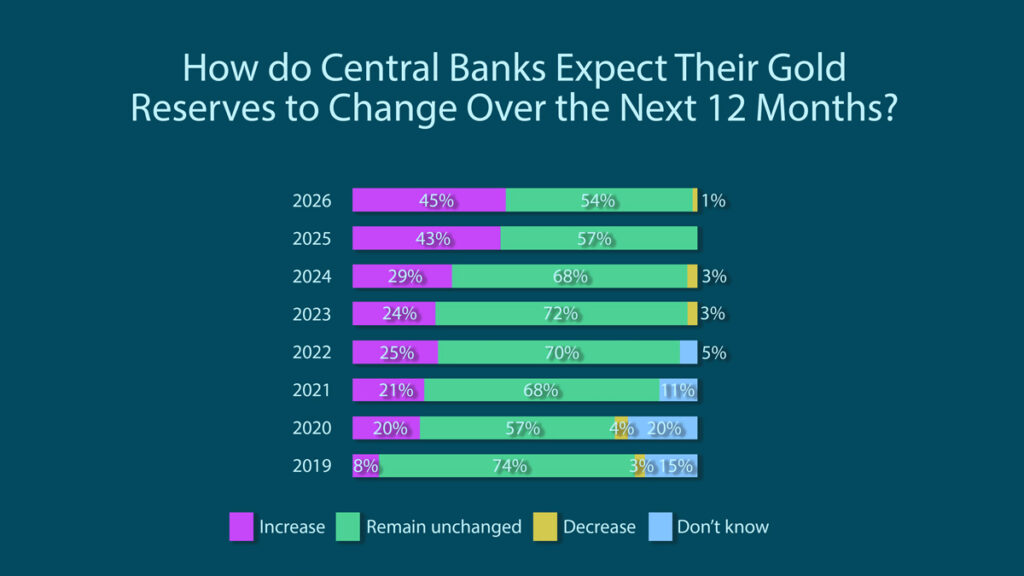
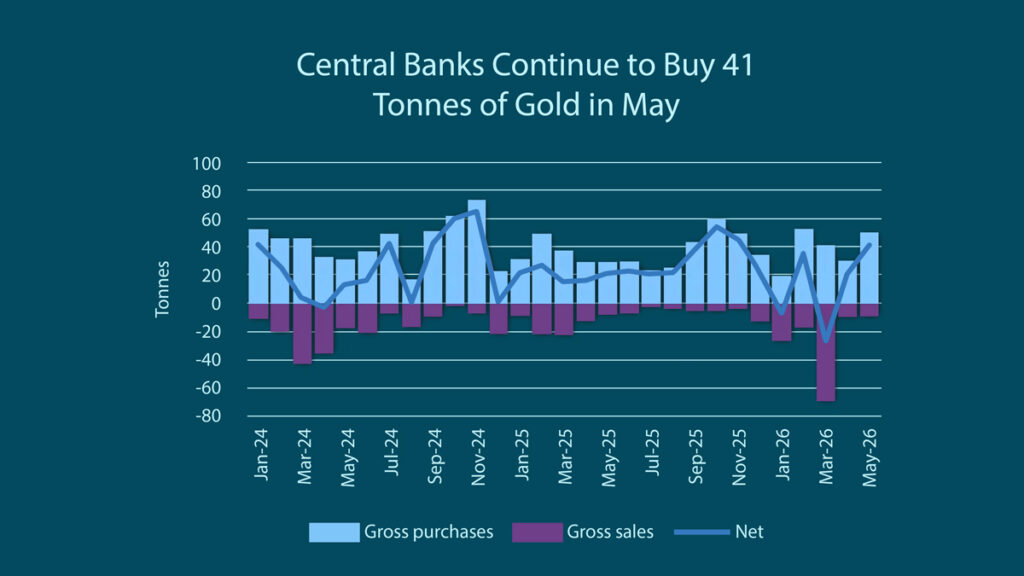
In May alone, official demand hit 41 metric tons. The question is less about whether gold prices will fall further in 2026 and more about why the long-term case for gold remains strong.
The National Debt Is Ramping Up
The U.S. national debt is on track to hit $40 trillion by September 2026. Meanwhile, interest costs account for $1 trillion of the annual federal budget. While experts warn of the unsustainable fiscal trajectory, politicians keep spending and borrowing more.
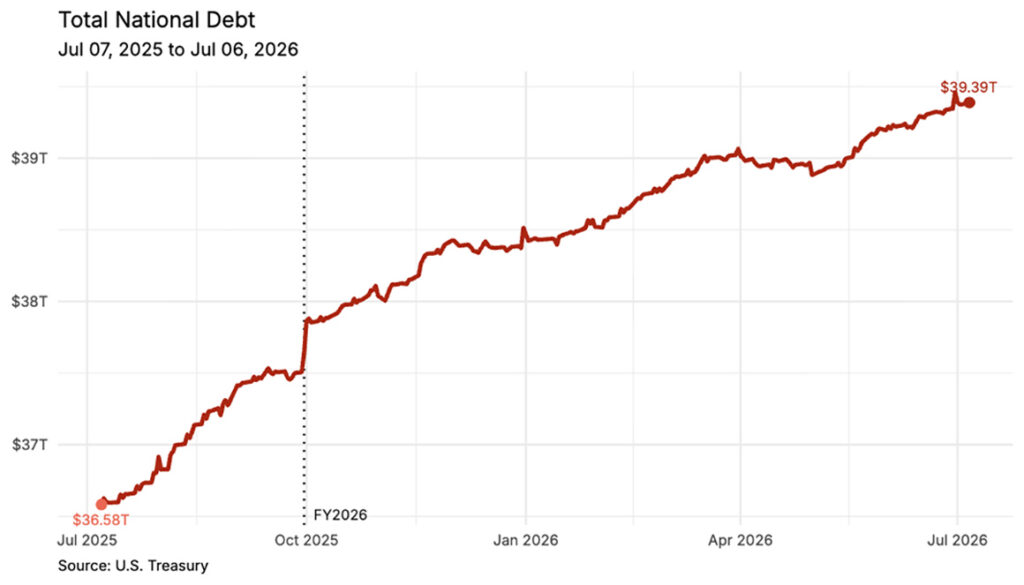
Via Congressman David Schweikert’s Daily Debt Monitor
At the same time, a global de-dollarization trend threatens to topple the USD as the world reserve currency. This is where last week’s The Gold Spot rings true. The modern government has forgotten what the Founders knew about gold, silver, and sound money.
Gold Is About Protection
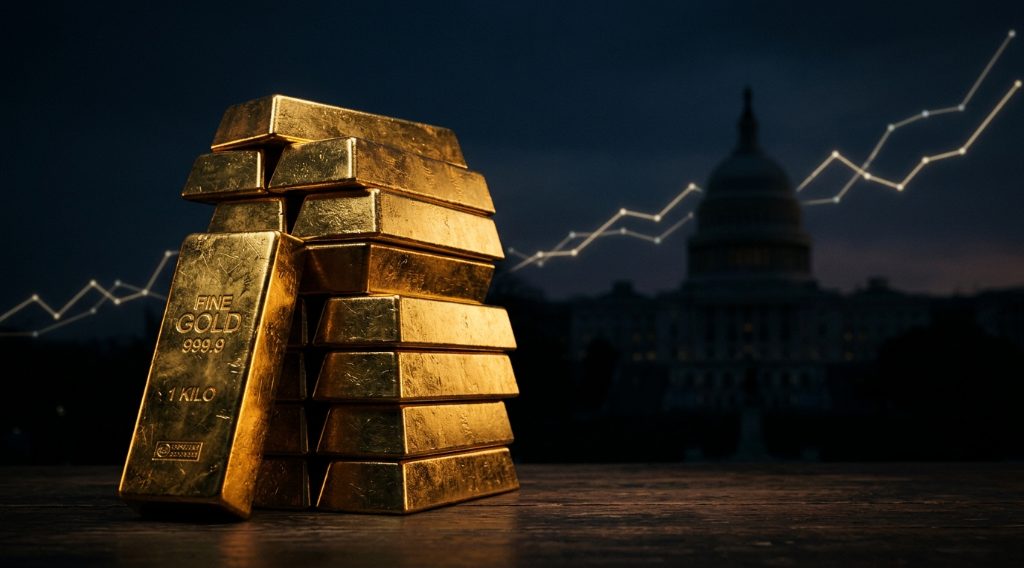
The short-term noise has pushed gold and silver lower, but it has not changed the reason investors own precious metals in the first place. Gold was never just about getting rich. It was never about calling every bottom perfectly or trying to trade every move on a chart. For serious investors, the point has always been protection.
Protecting wealth from inflation. Protecting purchasing power from a currency that can be printed at will. Protecting savings from a government that keeps borrowing, spending, and adding debt with no real restraint.
“The number one reason to own gold was never about getting rich. It's protection, plain and simple. Wealth protection. That's the ground we stand on, and we don't move off it.”
Brian Conneely
Sr. Precious Metals Advisor
When the long-term case for precious metals remains strong, lower prices can give investors a chance to buy protection at a discount. Waiting around for the perfect bottom might sound smart, but markets rarely make it that easy. By the time everyone agrees the bottom is in, the opportunity may already be gone.
If you’re interested in learning more about how investing in precious metals can help protect your wealth, grab a FREE copy of our Rookie Mistakes Guide. It walks investors through what to watch for before buying gold and silver, helping them avoid common mishaps and make more informed decisions from the start.
Question or Comments?
If you have any questions about today’s topics or want to see us discuss something specific in a future The Gold Spot episode, please add them here.
Comment
Questions or Comments?
"*" indicates required fields