
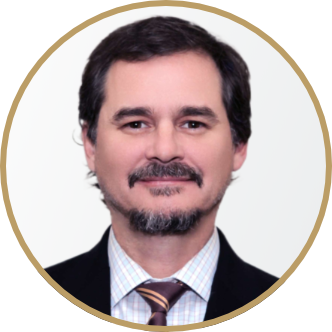
Damian White
Sr. Precious Metals Advisor
Damian White is a Sr. Precious Metals Advisor at Scottsdale Bullion & Coin. With a background in business and finance, he transitioned from real estate finance to focus on precious metals in 2016. Damian is dedicated to educating investors on the benefits of gold and silver, emphasizing the importance of wealth preservation and proper asset allocation.

Tim Murphy
Precious Metals Advisor
Tim Murphy is a Precious Metals Advisor with over 15 years of experience. He started on the New York Commodity Exchange floor before founding his own brokerage firm. Tim joined Scottsdale Bullion & Coin to leverage the small-company feel with national exposure, focusing on personalized, client-first service and fostering long-term relationships.

Add SBC on Google as a preferred source to see more market related news like this when you search.

Challenging economic conditions test every Federal Reserve Chair, and, nearly every time, something breaks. Is this pattern the result of bad timing or deeper, structural issues? History reveals that this trend is actually a bit of both.
Watch this week’s The Gold Spot to hear Scottdale Bullion & Coin’s Precious Metals Advisors Damian White and Tim Murphy discuss the connection between new Fed leadership and economic contractions, what drives this seemingly predictable relationship, and why Kevin Warsh is facing the most challenging situation yet.
When Leadership Changes, Markets Get Tested

Since the Federal Reserve’s founding in 1914, the U.S. central bank has been presided over by 16 Chairs. Over the decades, economists and investors have noticed a recurring trend of major market downturns following the election of a new Fed Chair.
With President Trump’s nominee Kevin Warsh expected to take the helm on May 15, 2026, many are wondering what the next few months or years may hold for the economy. Looking back at some of the most consequential Fed transitions paints a disturbing picture:
Alan Greenspan
Alan Greenspan was tapped to lead the Fed in 1987, at a time when the economy had been expanding for years and stocks were trading above their fundamentals. The underlying risk culminated in the largest single-day stock market loss, with the DOW plummeting by 23%. The dramatic Black Swan event became known as Black Monday, falling only two months into Greenspan’s tenure.
Ben Bernanke
In 2006, Ben Bernanke became Fed Chair just as the housing market was showing signs of destabilization. Years of systemic subprime lending had created a foundation of hidden risk. The cheap-borrowing bubble eventually burst, triggering the Global Financial Crisis. Over the next few years, housing prices fell by 30%, the S&P 500 declined by 57%, and 10 million Americans had to forfeit their homes.
Janet Yellen
When Janet Yellen became the first female Fed Chair, the economy was on a slow path to recovery from the housing market crash. The central bank had flooded the market with cheap money to aid in recovery, which had become a lifeline for economic stability. Yellen’s implementation of the first post-GFC rate hike caused significant tremors in the economy that set the stage for the next big crash.
Jerome Powell
Jerome Powell took over in 2018 as the economy was deep into a long expansion and markets were highly sensitive to rate hikes. His tightening cycle quickly triggered a sharp selloff in late 2018, revealing underlying fragility.
Soon after, the COVID-19 market crash sent markets into the fastest bear market in history. The Fed responded with massive stimulus, which helped fuel a surge in inflation and forced Powell into the most aggressive rate hike cycle in over 40 years, bringing volatility back into the system.
“The pattern is clear: Every new chair gets tested. And every time, something breaks.”
Damian White
Sr. Precious Metals Advisor
The Structure Behind Every Crisis
It’s tempting to place blame on the Fed Chair, especially due to controversial decisions, but the core issues lie far beyond the central bank’s control. In reality, the Fed only has two primary mechanisms for influencing the economy:
- Setting the cost of borrowing by maintaining, raising, or lowering federal interest rates, which sets the standard for yields
- Managing the flow of money through its balance sheet by buying and selling bonds to add or remove liquidity
The foundational cause of the economy’s constant boom-bust cycles is free-floating currency. With nothing of inherent value to ground its value, the U.S. dollar is subject to continuous inflation, excessive printing, and entrenched overspending.
In short, there are no guardrails on how much money is pumped into the economy. This leaves markets bouncing between risk-on periods with active investor participation and economic growth and risk-off periods characterized by uncertainty and market contraction.
According to data from the National Bureau of Economic Research, the average economic cycle — measured from the bottom of one downturn to the next — lasts roughly five to six years. By contrast, the Fed Chair serves a four-year term, making it increasingly likely that new leadership will step in during the later stages of a cycle, when risks are already mounting.
The Most Challenging Setup in Decades
With a proven track record as a fiscal hawk, Kevin Warsh seems like a decent choice to inject some fiscal responsibility into a system captured by the loose fiscal policies of Modern Monetary Theory. Unfortunately, Warsh is entering perhaps the most ominous macroeconomic and political backdrop of any prior Fed Chair.
“Now, it's Warsh's turn. And this setup may be the most complicated of all.”
Tim Murphy
Precious Metals Advisor
- Late-Cycle Economy: Markets have been on an upward, record-breaking trajectory since 2020, meaning Warsh is taking over right as previous economic cycles would signal an incoming contraction.
- Nearly $40 Trillion Debt: The exploding national debt stands at over $39 trillion and will likely hit the middle of $40 trillion during his tenure. This looming risk keeps immense pressure on all fiscal decisions.
- Debt Interest Payments: The government spends around $1 trillion annually to service the debt, and elevated interest rates make paying off this debt more expensive. However, premature cuts can negatively impact the economy.
- Elevated Fed Balance Sheet: Warsh is intent on reducing the Fed’s $6 trillion balance sheet, but years of stimulus have made markets highly sensitive to the unwinding of liquidity, potentially setting off a ripple of volatility.
- Political Pressure: Trump’s overt pressure campaign on Jerome Powell to cut interest rates has fueled a crisis at the Fed. Although Warsh testified that he’d operate independently, the political influence is a very real variable.
The “Everything Bubble” Threatens to Burst

Kevin Warsh is stepping into perhaps the bleakest setup for a Fed Chair in U.S. history. All the macroeconomic, geopolitical, and political conditions that typically precede a downturn are already in place.
The stock market has been revving far above fundamentals, consistently charting all-time highs. The national debt is almost $40 trillion and counting, while interest payments expand federal deficits. President Trump is actively straining the independence of the Fed, and Congress refuses to exercise fiscal responsibility. The only question that remains is when this omni-bubble will burst and how negatively investors will be impacted.
“The biggest concern is that we find ourselves at the top of the everything bubble going into this. They always blame it on who's in charge.”
Damian White
Sr. Precious Metals Advisor
If you’re concerned about where we are in the cycle and what a Fed transition could mean for markets, now is the time to get clarity.
Feel free to contact us today by calling toll-free at 1-888-812-9892 or using our live chat function.
Click below to request your FREE COPY of our Precious Metals Investment Guide and learn how gold and silver can help protect your portfolio in uncertain times.
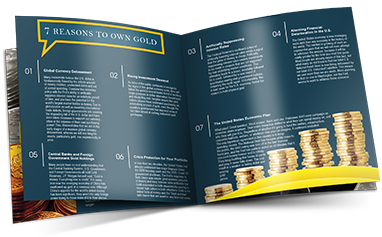
Everything you need to know to get started in Precious Metals
Learn how precious metals can strengthen your portfolio, protect your assets and leverage inflation.
Request the Free GuideQuestion or Comments?
If you have any questions about today’s topics or want to see us discuss something specific in a future The Gold Spot episode, please add them here.
Comment
Questions or Comments?
"*" indicates required fields