

Steve Rand
General Manager / Sr. Precious Metals Advisor
Steve Rand is the General Manager and a Sr. Precious Metals Advisor at Scottsdale Bullion & Coin. He brings over 20 years of experience in the physical precious metals markets.

Todd Graf
Precious Metals Advisor
Todd Graf is a seasoned Precious Metals Advisor at Scottsdale Bullion & Coin. He has a decade-long career in finance, previously at Morgan Stanley and Vanguard. He is Series 7 licensed and has extensive experience in traditional and defensive assets, providing clients with solid investment strategies.

Add SBC on Google as a preferred source to see more market related news like this when you search.


Gold is one of the most value-dense assets on earth, yet many of the world’s largest private bullion vaults are running out of space. While gold buying is steadily rising for both official and retail investors, increased demand doesn’t tell the whole story.
In this week’s The Gold Spot, Scottsdale Bullion & Coin’s Sr. Precious Metals Advisor Steve Rand and Precious Metals Advisor Todd Graf uncover the surge in vault demand, why wealthy investors increasingly prioritize allocated physical gold, and why central banks and everyday investors are increasingly thinking about gold in surprisingly similar ways.
A Global Gold Vault Expansion Is Underway

Across the globe, private bullion vaults are running out of room as a deluge of wealthy investors seek to house their investments.
“Private vault operators are running out of room.”
Steve Rand
General Manager / Sr. Precious Metals Advisor

From London and Switzerland to Singapore and Hong Kong, some of the largest and most well-funded vault operators are expanding current facilities, opening new locations, or searching for ways to handle a sudden rise in vault demand.
- Sharps Pixley’s underground London vault is searching for another site, attributing demand partly to family offices and clients switching from gold ETFs into physical bullion.
- Swiss Gold Safe says all six of its vault locations need expansion, with insurance limits creating capacity constraints beyond simple floor space.
- MKS PAMP is considering a “substantial” new high-end vault for ultra-wealthy clients with $200 million or more in bullion.
- Singapore’s Le Freeport reports that its highly desirable basement bullion-vault space is nearing capacity.
- DBS expanded its Singapore bullion-vaulting capacity in 2026 as demand increased among private-wealth and institutional clients.
- OCBC and Deutsche Bank are considering obtaining additional Singapore vault capacity as their physical-gold business expands.
- Singapore’s The Reserve announced plans to quintuple capacity from 500 to 2,500 tonnes, adding 2,000 tonnes through 23 new high-security vaults.
- Standard Chartered is exploring opening its first proprietary gold vault in Hong Kong, as Asian demand for bullion custody grows.
- HSBC is increasing Hong Kong gold-storage capacity to 200 tonnes, alongside Hong Kong’s broader push to exceed 2,000 tonnes of total capacity within three years.
Wealthy Investors Begin Emphasizing Ownership
There’s no denying that gold demand has risen—among official, institutional, and retail investors—over the past few years.
However, this global shortage of vault space is less about the investment amount and more about how these assets are structured. More and more investors are prioritizing allocated over unallocated gold, which is a crucial distinction most people don’t think about.
- Allocated gold refers to specific gold bars assigned directly to an owner, identifiable by serial number, weight, and fineness.
- In contrast, unallocated gold is an IOU from the institution for an equivalent amount of gold.
According to the World Gold Council (WGC), over 90% of gold traded between major institutions in London uses unallocated accounts. Thus, most of these trades give investors a claim to gold through an institution rather than direct ownership of specific physical gold bars.
“It’s not just that wealthy people are buying more gold. It’s what they’re asking for when they buy it: allocated, physical, identifiably theirs, and held outside the banking system. Simple exposure to gold prices isn’t cutting it anymore for a growing number of investors.”
Steve Rand
General Manager / Sr. Precious Metals Advisor
Central Banks Are Rethinking Gold Custody, Too
As private bullion vaults experience a spike in demand and a drop in available space, the United States—the world’s largest custodian of foreign-owned gold—is witnessing a steady stream of repatriations. Increasingly, countries are moving their central bank gold reserves domestically or closer to home. Just in August, the Dutch central bank reduced its stockpiles held in the New York Federal Reserve from 31% to 18%.
While central banks and wealthy private investors operate in very different markets, under different constraints and with different goals, both are increasingly prioritizing the same underlying concerns: where their gold is held, how readily it can be accessed, and how much control they retain over it.
| Central banks want… | Wealthy individuals/Family offices want… |
|---|---|
| Geographic diversification | Allocated, physically stored bullion |
| Readily tradable reserves | Reduced exposure to counterparty risk |
| Availability during a crisis | Ownership outside of the banking system |
The central bank shift towards physical reserves and domestic allocation has helped gold overtake the dollar and euro as a share of international reserves. While the Fed has claimed gold hasn’t replaced Treasuries outright, it risks missing the broader story.
“These aren’t identical situations, but there’s a common thread running through them: control, accessibility, and reduced dependence.”
Steve Rand
General Manager / Sr. Precious Metals Advisor
This trend is only starting to heat up, too. A WGC survey found that 10% of central banks diversified their overseas gold-storage locations over the previous year, up from just 2%. About 9% increased domestic storage, and another 9% expect to diversify their overseas storage further.
The World’s Wealthiest Investors Are Increasing Gold Exposure
Private-vault demand is rising alongside a broader shift in how wealthy investors position their portfolios. Surveys and private-bank data show affluent investors and family offices increasing gold exposure, emphasizing diversification and resilience, and specifically demanding locally stored physical gold.
- HSBC: Of 9,993 affluent and high-net-worth investors surveyed across 10 markets, 52% planned to increase their gold investments in 2026, rising to 62% among respondents in Asia and the Middle East.
- UBS: Its survey of 307 family offices across 30+ markets, representing families worth an average of $2.7 billion, found 60% planned strategic portfolio changes, while those making changes were considering increasing average gold allocations from 2% to 3%.
- Bank of Singapore: Client holdings of physical gold have risen more than 40% since the end of 2025, with the vast majority belonging to ultra-high-net-worth clients, as the bank says clients increasingly want bullion held locally.
Physical Gold Demand Is Separating From Paper Gold Demand

Physical gold demand is increasingly moving differently from exchange-traded exposure. Global bar-and-coin investment reached 784 tonnes in H1 2026, including roughly 477 tonnes in Q1—the second-highest quarterly total on record, per the WGC.
The divergence was especially clear in Q2. Globally, investors bought 307 tonnes of bars and coins while gold ETFs recorded 44.8 tonnes of outflows. In the U.S., bar-and-coin demand rose 28% year over year to 13.8 tonnes, while U.S.-listed gold ETFs shed 44.4 tonnes.
To be sure, the same investors aren’t necessarily jumping from paper to physical gold. Yet, demand for physical gold is strengthening even as investors reduce their exposure through gold ETFs.
What’s Driving the Push for Greater Control

A broad swath of gold buyers, from private wealthy investors to central bank officials, are prioritizing direct control over their physical gold. The understandable question is: why is this trend happening now?
While various factors play a role in driving this trend—including national debt, international sanctions, geopolitical tensions, and an increasing dependence on digital systems—investors are largely driven by a general feeling of uncertainty.
“Physical bullion is different. Properly owned, physical gold doesn’t need an issuer to keep a promise for the asset to exist, and it was traded long before electricity was ever harnessed.”
Todd Graf
Precious Metals Advisor
How to Take Greater Control of Your Gold
For individual investors, greater control starts with understanding how you own, store, and access your gold.
- Ownership: You hold physical gold rather than mere price exposure
- Allocation: Specific coins or bars are assigned directly to you
- Storage: Your gold is held in a clearly defined, deliberate location
- Access: You know how to retrieve or sell your precious metal when needed
- Custody: You know who controls the asset and whether anyone else has a claim on it
If you’re eager to learn more about exposing your portfolio to precious metals or expanding your holdings, grab a FREE copy of our Precious Metals Investment Guide.
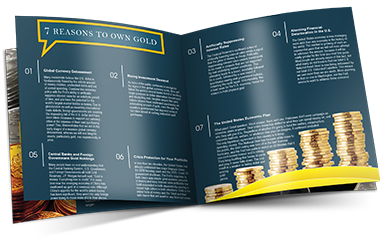
Everything you need to know to get started in Precious Metals
Learn how precious metals can strengthen your portfolio, protect your assets and leverage inflation.
Request the Free Guide
Question or Comments?
If you have any questions about today’s topics or want to see us discuss something specific in a future The Gold Spot episode, please add them here.
Comment
Questions or Comments?
"*" indicates required fields