

Eric Sepanek
SBC Founder
Eric Sepanek is the founder of Scottsdale Bullion & Coin, established in 2011. With extensive experience in the precious metals industry, he is dedicated to educating Americans on the wealth preservation power of gold and silver.
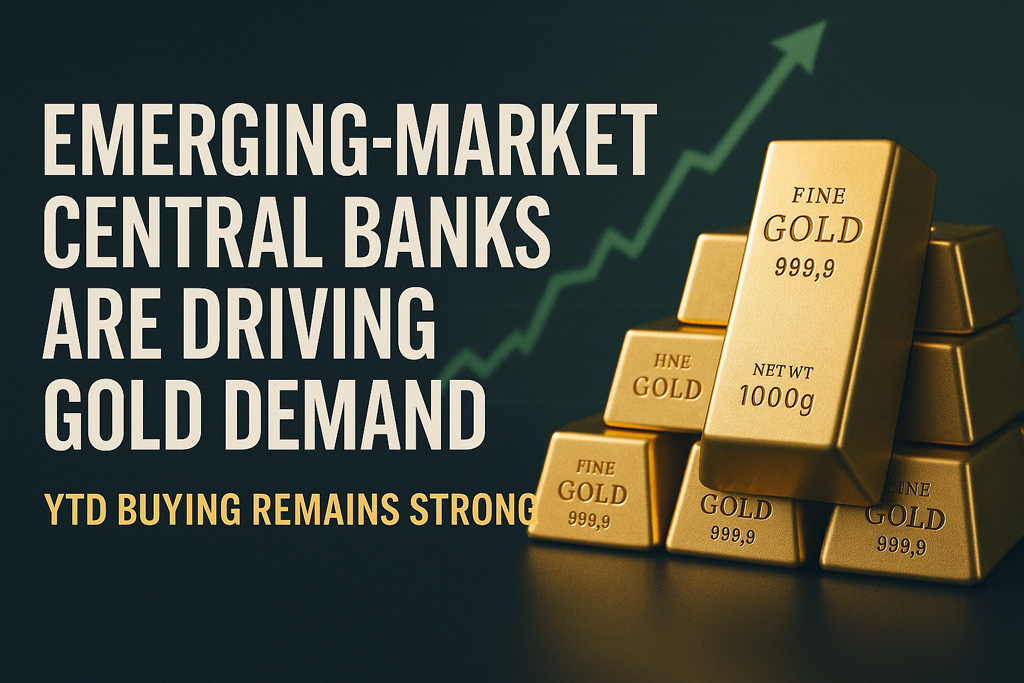 Central banks are still aggressively accumulating gold, and October delivered the strongest monthly net demand of the year. Official demand reached 53 tonnes, marking a 36% month-over-month surge. The spike in consumption followed a solid Q3, when central banks added 220 tonnes even as record-high gold prices earlier in 2025 had briefly moderated the pace of buying.
Once again, emerging markets lead the gold buying frenzy, with many global reserve managers signaling further purchases into 2026. The renewed momentum underscores that central banks continue to treat gold as a strategic, long-term asset, not a short-term trade.
YTD Buying Remains Strong
Following a temporary dip in purchases, official buyers hit a major stride in October, reaching an annual high in gold demand. In total, central banks bought 53 tons, bringing year-to-date purchases close to 687 tons.
Governments kicked off the year enthusiastically, sweeping up 242 tons. This came after three consecutive years of 1,000+ tonnage demand. Purchases waned slightly in Q2, reaching only 172 tons. Q3 marked a resurgence as total purchases stretched to 220 tons.
October’s year-to-date peak indicates that official appetite is growing into the end of 2025 and beyond. Despite this revival in gold interest, it’s still unclear if central banks will clear the 1,000-ton hurdle that’s been held since 2022.
Emerging-Market Central Banks Are Driving Demand
Another recurring theme in the gold market is the disproportionate demand stemming from emerging markets.
Q3 and October gold purchases were dominated by smaller, regional economies looking to shore up their currencies in the midst of a global de-dollarization push. The National Bank of Poland remains the single largest source of gold demand, accumulating more than double the runner-up, Kazakhstan.
China is another recurring name on the gold-buying leaderboard. October marked 12 straight months of physical gold consumption, bringing Beijing’s total reserves to 2,304 tons. That represents a staggering 8% of the country’s foreign exchange reserves — a growing trend among foreign nations as gold becomes the world’s number-two reserve asset.
While China’s reported gold buying is significant, many analysts believe the country is deliberately underreporting its purchases as part of a broader effort to test the dollar’s dominance.
Central Banks Increasing Gold Targets for the Future
Earlier in the year, the World Gold Council’s Central Bank Gold Reserves Survey reinforced a rising trend in official-sector demand. The results showed that 95% of reserve banks planned to increase their physical stockpiles over the next 12 months, a forecast which turned out to be true.
Recently, various central banks have announced similar plans with time horizons well beyond 2025, underscoring how these intentions translate into concrete policy actions:
- The National Bank of Serbia plans to raise its gold reserves to at least 100 tonnes by 2030, nearly doubling from current levels, signalling renewed long-term commitment to bullion.
- At the most recent London Bullion Market Association (LBMA) conference in Kyoto, the central banks of Madagascar and South Korea signalled they are looking to increase their gold reserves.
- The Central Bank of Kenya (CBK) said it is “actively considering” adding gold to its reserves as part of a strategy to diversify away from heavy reliance on U.S. dollar-denominated assets.
- Several African central banks, including those in coastal and landlocked states, are showing renewed interest in gold accumulation as a hedge against forex-market volatility and global uncertainty.
Buying Trends Point to Strategic Behavior
Despite record-high gold prices, emerging-market central banks continue to accumulate gold at a steady and deliberate pace. Participation also broadened throughout the year, with several previously inactive central banks returning to the market, reinforcing that this is a structural, long-term trend, not a fleeting spike in buying.
The WGC notes that the strategic case for gold remains “front and center” for reserve managers heading into Q4.