

Steve Rand
General Manager / Sr. Precious Metals Advisor
Steve Rand is the General Manager and a Sr. Precious Metals Advisor at Scottsdale Bullion & Coin. He brings over 20 years of experience in the physical precious metals markets.

Damian White
Sr. Precious Metals Advisor
Damian White is a Sr. Precious Metals Advisor at Scottsdale Bullion & Coin. With a background in business and finance, he transitioned from real estate finance to focus on precious metals in 2016. Damian is dedicated to educating investors on the benefits of gold and silver, emphasizing the importance of wealth preservation and proper asset allocation.

Add SBC on Google as a preferred source to see more market related news like this when you search.

Banking crises rarely look dangerous until confidence breaks. By the time accounts freeze, withdrawals are restricted, or emergency measures arrive, the rules have usually already changed. Your capital may already be at risk in a banking system that has unlocked new legal mechanisms to convert your deposits into the latest form of bailouts.
Watch this week’s The Gold Spot to hear Scottsdale Bullion & Coin’s Sr. Precious Metals Advisor Steve Rand and Damian White discuss the hidden way banks can tap into your deposits to cover their losses, the rise of the legal bail-in mechanism, and how precious metals can offer protection from the teetering U.S. financial system.
The Collapse of 2008: Taxpayers Became the Backstop
Most Americans are well-acquainted with the concept of a bailout, with the 2008 Global Financial Crisis leading to one of the most infamous instances of government intervention in the private market. A decades-long trend of subprime mortgage lending placed the U.S. financial sector in a precarious position.
With overleveraged positions in the collapsing housing market, a closely linked system of short-term borrowing, and a series of major failures, including Bear Stearns and Lehman Brothers, a cascading collapse of debt threatened to take down the entire banking system. Instead of letting the banks shoulder the burden of their mismanagement, the federal government launched one of the largest bailouts in American history.
Through the Emergency Economic Stabilization Act of 2008, Congress authorized $700 billion in stimulus through preferred stock purchases, loans, equity investments, and asset purchases. Ultimately, the banking industry received $425.5 billion in quasi-loans. What’s worse, the government failed to recover these funds, resulting in a net loss of about $31 billion of taxpayer money.
The Rise of Bail-Ins: Financial Risk Shifts But Remains
After public outrage over this infamous bailout, Congress passed the Dodd–Frank Wall Street Reform and Consumer Protection Act, aimed to eliminate the use of tax dollars to subsidize private corporate losses. Although this legislation may have ended the practice of bailouts, it ushered in the era of bank bail-ins.

A sneaky component of the Dodd-Frank Act – Title II: Orderly Liquidation Authority (OLA) – allows failing financial institutions to force their losses onto certain creditors, investors, and shareholders. This quietly shifted the burden from the broad tax base to individuals depositing and investing at these banks, wrapped in the guise of preventing a repeat of the 2008 bail-out.
Although the Federal Deposit Insurance Corporation (FDIC) claims to back up deposits of up to $250,000 for each American, sufficient funds simply don’t exist. As of 2025, the FDIC holds only $153.9 billion in assets, which pales in comparison to the trillions of dollars that U.S. depositors hold in banks.
SVB Reveals Remaining Cracks
Despite years of new regulations and reforms, signs suggest the U.S. banking system has never fully escaped the vulnerabilities exposed during the Global Financial Crisis. The seemingly overnight collapse of Silicon Valley Bank (SVB) sent a stark reminder that investors still face serious risks in this temperamental system.
In a single day, depositors attempted a mass withdrawal of $42 billion, which represented a quarter of SVB’s total deposits. This bank run exceeded $100 billion in a few days, marking the largest digital banking outflow in history. Federal regulators were unable to prevent the spread of these foundational weaknesses, leading to the immediate failure of Signature Bank and First Republic and the near-wipeout of several other banks.
When Banking Stress Reaches Depositors
The U.S. has seen glimpses of a full-scale bank bail-in, but creditors have skirted these financial disasters… at least for now. Alarmingly, recent history is dotted with instances of banking failures leading to restricted withdrawals, frozen accounts, and converted deposits, such as:
- Cyprus (2013) — The Cypriot banking catastrophe resulted in roughly $9.3 billion of depositor-funded restructuring, alongside a $13.3 billion international rescue package.
- Greece (2015) — As fears of a euro exit escalated, banks closed, withdrawals were capped, and capital controls spread nationwide while Greece received rescue programs totaling roughly $320 billion.
- Lebanon (2019–present) — Lebanon’s financial collapse led to years of withdrawal restrictions and trapped deposits, with estimated banking-sector losses exceeding $70 billion.
- Argentina (2001) — The “Corralito” crisis froze access to bank deposits and imposed withdrawal limits as Argentina’s economic collapse spiraled into a sovereign default exceeding $100B USD.
“The legal framework for all this to happen already exists.”
Damian White
Sr. Precious Metals Advisor
Warning Signs Flash Across the U.S. Economy
The pressure isn’t only building inside banks. Increasing strain across American households may be creating weaknesses from the bottom up, while financial institutions face stress from the top down.
- Record Consumer Debt — Total U.S. household debt recently reached roughly $18.8 trillion, averaging around $154,000 per household, reflecting growing pressure across mortgages, credit cards, auto loans, and student debt.
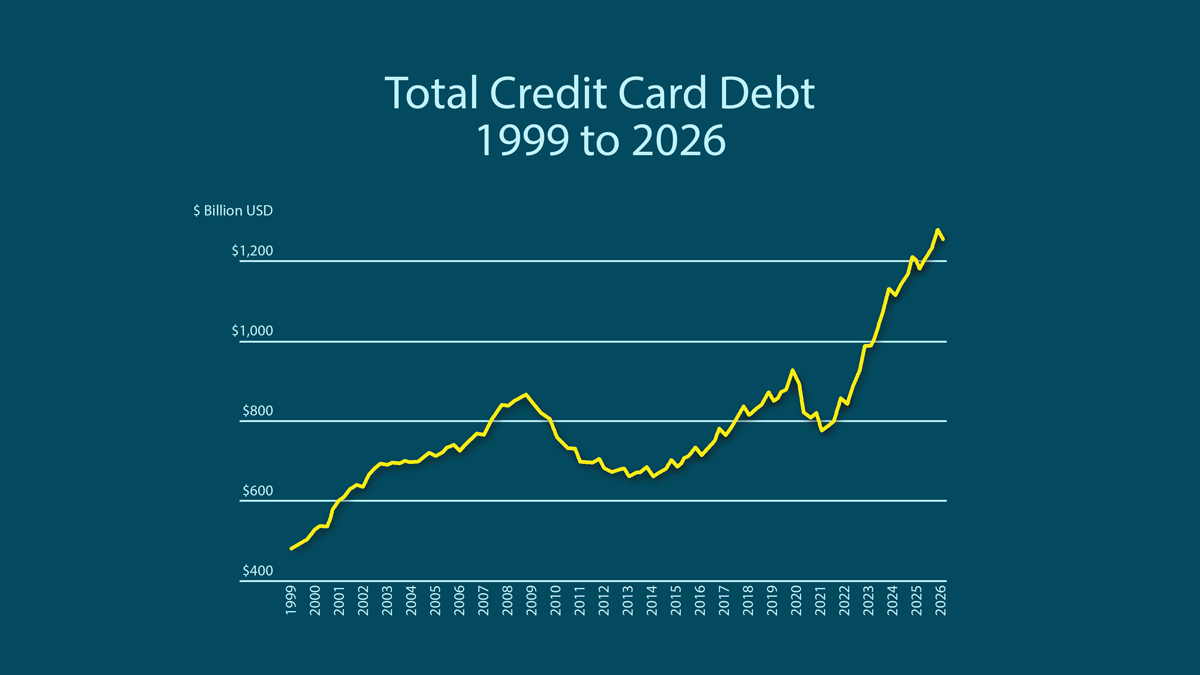
- Rising Credit Card Balances — Outstanding credit card debt climbed to approximately $1.28 trillion, up roughly 63% in five years, while serious delinquencies have risen toward 7%.
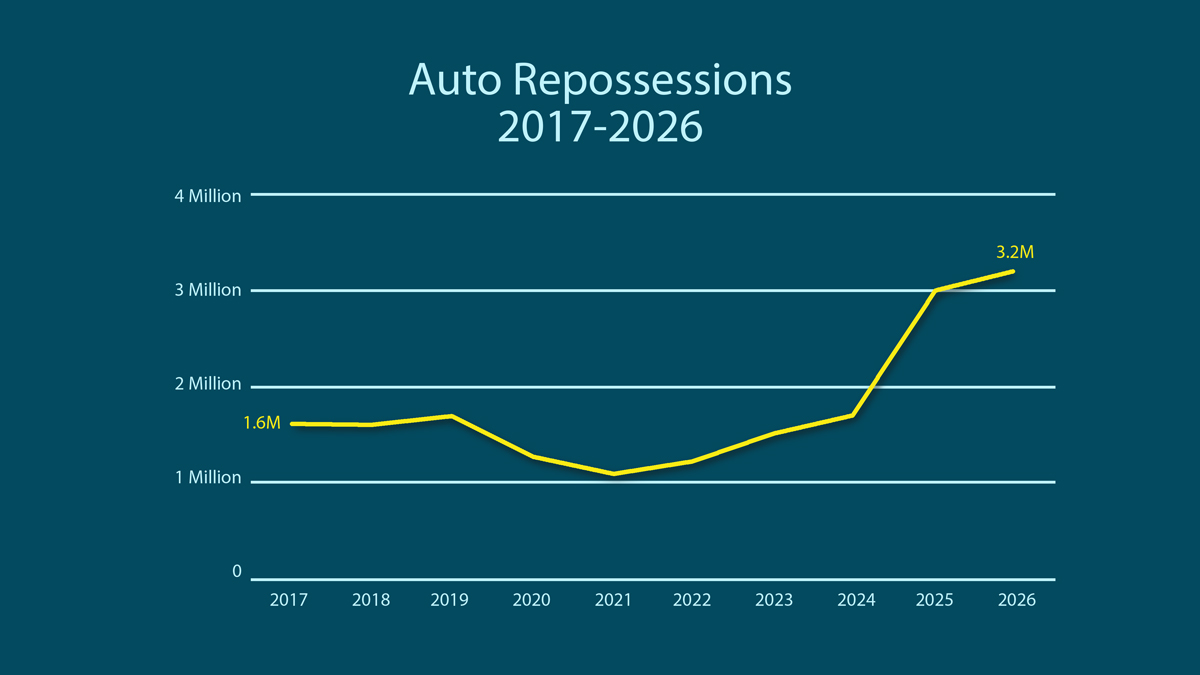
- Increasing Auto Loan Stress — Auto loan delinquencies have reached a 15-year high, with well over 2 million vehicles repossessed in 2025 alone.
- Climbing Mortgage Delinquencies — Overall mortgage delinquencies have approached 5%, while delinquency rates on FHA-backed loans have moved near 12%, signaling heavier stress in more vulnerable segments of the housing market.
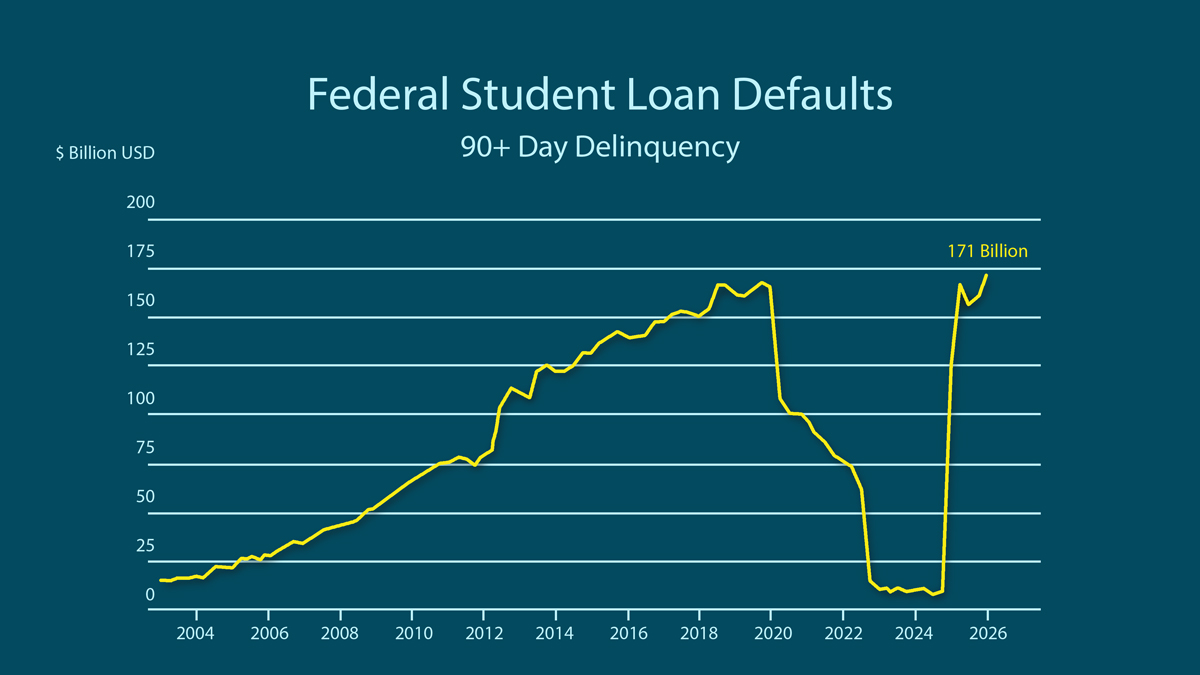
- Returning Student Loan Defaults — Nearly 5.5 million borrowers are reportedly in default, renewing pressure on household finances after years of payment pauses and policy changes.
- Elevated Margin Debt — Borrowing against investment portfolios has climbed toward $1.3 trillion, increasing the risk of forced selling if markets weaken and liquidity tightens.


Investors Find Safe Haven in Physical Metals

This is where physical precious metals, such as gold and silver, enter the equation. Savvy investors leverage the protections and value inherent in these safe-haven assets to shield their wealth from the volatility of the banking system. Here are some core reasons these unique investments offer security:
- External Positioning — Physical gold and silver are held directly by investors, completely outside of the banking system, adding insulation from the repeated failures of the U.S. financial system.
- No Counterparty Risk — Tangible precious metals eliminate the third-party risk introduced by depositing funds in a bank, as these assets offer truly independent ownership.
- Zero Risk of Restructuring — The Dodd-Frank Act contains no provisions that allow financial institutions to restructure physical gold or silver in the event of a bail-in.
- Historical Precedent — For over a century, precious metals have shown a tendency to keep pace with inflation, often rising during bouts of broader financial pressure.
“There's no speculation here. This is the track record.”
Steve Rand
General Manager / Sr. Precious Metals Advisor
New Silver Investor Report Available Now!

If you’re interested in learning more about how precious metals can safeguard your wealth against an increasingly risky banking system, check out our newest report. Silver: The Awoken Giant explains everything you need to know about investing in this shiny metal and why it acts as a buffer from broader financial hazards. Download your free digital copy or request a physical report mailed directly to you.
Question or Comments?
If you have any questions about today’s topics or want to see us discuss something specific in a future The Gold Spot episode, please add them here.
Comment
Questions or Comments?
"*" indicates required fields