

Eric Sepanek
SBC Founder
Eric Sepanek is the founder of Scottsdale Bullion & Coin, established in 2011. With extensive experience in the precious metals industry, he is dedicated to educating Americans on the wealth preservation power of gold and silver.

John Karow
Sr. Precious Metals Advisor
John Karow is an experienced lawyer and Precious Metals Advisor at Scottsdale Bullion & Coin. He holds degrees from Lehigh University, the University of Missouri, Cornell University, and St. John’s University School of Law. John is a knowledgeable authority in precious metals, dedicated to helping clients navigate economic cycles and gold and silver investments.

Add SBC on Google as a preferred source to see more market related news like this when you search.

The precious metals market routinely goes through headline cycles where gold takes the spotlight until the pressure building in the silver market propels it to the forefront. With supply deficits entering their sixth year and the risks of a silver squeeze rising, analysts are starting to pay attention.
In this week’s The Gold Spot, Scottsdale Bullion & Coin Founder Eric Sepanek and Sr. Precious Metals Advisor John Karow reveal why silver’s above-ground stockpile can be misleading, what’s driving the market’s persistent shortfalls, and how shifting global supply raises the chances of another physical squeeze.
Above-Ground Silver ≠ Available Silver
At first glance, silver’s supply picture appears distorted. There’s routine discussion of silver shortages and inventory limitations, yet the latest figures indicate that about 19.3 billion ounces of physical silver exist above ground. So, what is driving the silver market toward its sixth-straight annual deficit, and what caused the massive physical liquidity squeeze in London in 2025?
The answer lies in the technical difference between “above ground” and “available” silver. Unlike gold, which is almost exclusively used for investment products, silver serves a dual role as an industrial and investment asset. Thus, a solid portion of the physical silver that’s been mined is tied up in or rendered economically unrecoverable through any number of its various applications.

Only a Fraction of Above-Ground Silver Is Readily Available
Digging deeper into the numbers from major bullion trading hubs makes this reality crystal clear. Of the approximately 19.3 billion ounces of silver above ground, London vaults only held about 907 million ounces as of July 2026, according to the latest London Bullion Mark Association data. Bear in mind that vaulted silver isn’t necessarily available to meet immediate demand.
Physically backed silver bullion exchange-traded products (ETPs) and other owners can remove considerable portions of those inventories from the market. For context, only around 17% of London’s silver supply, or 136 million ounces, was not tied to ETPs during the height of the 2025 silver squeeze. By March 2026, that share had recovered to about 28% of London’s total silver inventory, improving liquidity but still leaving the market with a relatively thin pool of readily available metal.
Silver shortages aren’t defined by how much metal exists on paper. They emerge when readily available physical silver in key trading hubs becomes too scarce to meet immediate demand.
“The above-ground silver stockpile looks big on paper, but what’s actually usable of that pile is a lot smaller.”
Eric Sepanek
SBC Founder

Silver Heads to Sixth Straight Years of Deficits
In 2026, silver is on pace to mark its sixth consecutive year of supply deficits, where demand outstrips available resources. The Silver Institute estimates global purchases at 1.113 billion ounces and supply at 1.066 billion ounces for the whole year. That remaining 46.3 million-ounce gap would continue a shortfall that has persisted since 2001.

Over the past six years, the market has pulled 762 million ounces from existing stockpiles to cover the shortfall, representing about 90% of one year’s mine production at current rates. Notably, demand is projected to decline by 2% between 2025 and 2026. However, supply is projected to fall slightly more, by 2.2%.
That modest differential is enough to keep the market in deficit and deepen the cumulative shortfall built up over the past several years.
Why Do Silver Prices Seem “Low”?
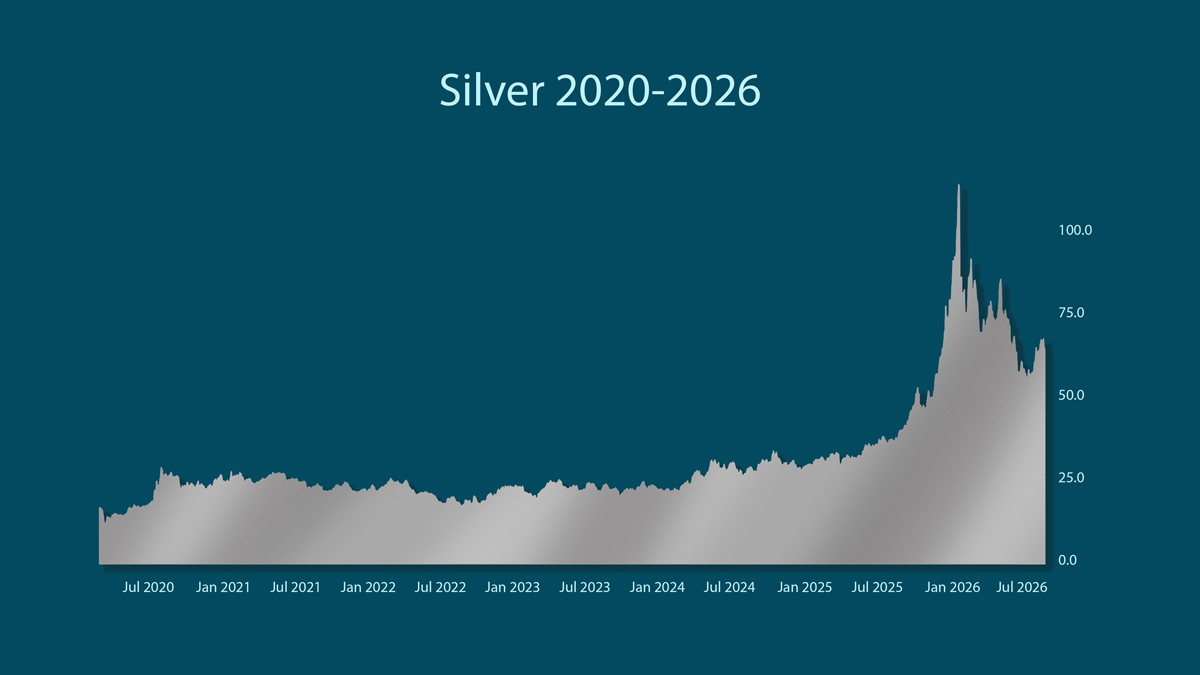
Upon hearing about this prolonged supply crunch, some investors wonder why it’s not reflected in silver prices. The answer requires some context. While the shiny metal has corrected from all-time highs back in January 2026, it remains near the top of an unprecedented, multi-year rally. For context, in 2020, silver fell below $13 per ounce. Still, silver price predictions for 2026 remain bullish, with many analyses saying the shiny metal still has room to run.
Why Higher Silver Prices Can’t Quickly Fix Supply
Besides, higher silver prices wouldn’t solve the half-decade-plus supply strain, either. In addition to being actively consumed in various industrial applications, the silver market faces further inelasticity from mining concentration. Around three-quarters of mined silver comes as a byproduct of mining other metals, such as copper, lead, zinc, and gold.
As a result, miners cannot simply heighten their output as silver demand and prices rise. S&P Global found that the average silver mine’s timeline from exploration to production has tripled over the past few decades. The average lead time for mines entering production between 2020 and 2024 is 17.8 years, compared to just 6.4 years for mines launched in the 1990s.
Global mine production is actually projected to fall from 846.6 million ounces in 2025 to 844.1 million ounces in 2026. Recycling—the recovery of previously used silver and its return to market supply—is projected to reach its highest level since 2012, but still fall short of closing the deficit.
Silver Shortage vs. Silver Squeeze

Another crucial distinction for understanding the silver market’s current setup is the difference between a silver shortage and a silver squeeze. These disparate events often occur in tandem, which can add to the confusion. Put simply, a silver shortage is a supply-demand imbalance in which available stockpiles cannot keep up with purchases.
On the other hand, a silver short squeeze occurs when buyers demand more immediately deliverable physical silver than the market can provide. A supply shortage doesn’t guarantee a squeeze, but strained conditions for over half a decade certainly increase the likelihood.
This is what happened back in 2025 (#SilverSqueeze) when potential tariffs on precious metals spurred investors to pull large amounts of silver from London to the U.S. Virtually overnight, the cost of borrowing physical silver spiked from a baseline of 1% to 39%, with some overnight quotes reportedly hitting 200%.
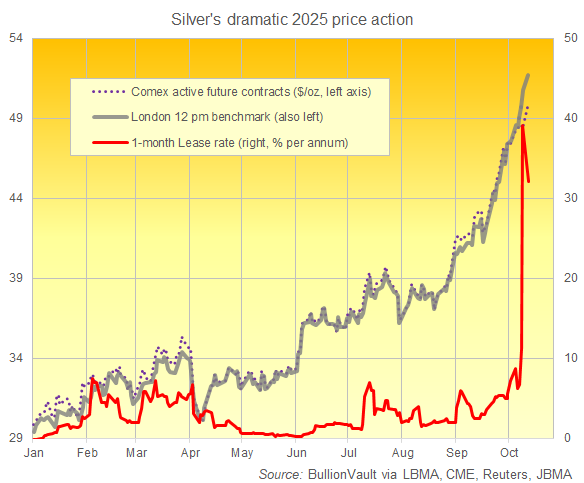
In response, buyers and borrowers competed for the limited metal available by entering into a bidding war, which spiked silver prices exponentially. Although silver’s record-shattering surge occurred within a few weeks, the bullish cup-and-handle formation had been forming for five decades.

“When this happens, you get huge spikes in the market because the supply simply can't meet the demand. The squeeze ended, but the deficit is far from over.”
John Karow
Sr. Precious Metals Advisor
What Could Spark the Next Silver Squeeze?

As mentioned before, a supply deficit doesn’t necessitate a squeeze, but it certainly provides fertile ground for explosive growth. Currently, market analysts are focused on two key risks that could provide the next catalyst: surging investment demand and tighter geopolitical control over silver flows.
- Citi recently revealed a report suggesting that investment demand could become the silver market’s dominant driver, with stronger inflows possibly pushing prices toward $90 per ounce. While industrial demand is cyclical and more predictable, investor demand can occur rapidly and without warning, catching an undersupplied market off guard.
- China poses another risk, but on the supply side of the equation. Recently, Beijing unveiled a strict export licensing regime exerting more control over the nation’s silver trade. Alone, China accounted for roughly 13% of global silver mine production in 2025, giving the country considerable influence over physical supply flows.
Silver Has Less Room for Error

The silver story isn’t that the world is about to run out. It’s that six straight deficits have steadily reduced the market’s margin for error.
“The takeaway isn't that we're about to run out of silver. It's that the market has lost its cushion because six straight years of deficits have worn down that cushion, and supply can't react quickly to price. That thin cushion is what turns a shortage into a squeeze.”
John Karow
Sr. Precious Metals Advisor
A shortage doesn’t tell investors when silver prices will move. It tells us the market’s buffer is getting thinner. The catalyst—investment demand, geographic dislocation, monetary conditions, geopolitical stress, or something unexpected—determines when that thinner cushion matters.
For a deeper look at the forces reshaping the silver market, claim a FREE COPY of our popular report, Silver: The Awoken Giant:
Unlock Silver Investor Trade Secrets in our Investor Report.
Get Your Free Report
Question or Comments?
If you have any questions about today’s topics or want to see us discuss something specific in a future The Gold Spot episode, please add them here.
Comment
Questions or Comments?
"*" indicates required fields